


Aluminum Profile Customization: A Complete Guide for Industrial and Architectural Applications
In modern manufacturing and construction, aluminum profile customization has become an essential solution for companies seeking efficiency, precision, and long-term value. From industrial equipment to architectural systems and interior design, custom aluminum profiles provide flexibility and performance that standard profiles cannot achieve.
This guide explains what aluminum profile customization is, why it matters, how the process works, and how to choose the right custom aluminum extrusion manufacturer.
What Is Aluminum Profile Customization?
Aluminum profile customization refers to the design and production of aluminum extrusions based on specific project requirements. These requirements may include cross-section geometry, dimensions, alloy selection, mechanical performance, surface finish, and fabrication methods.
Unlike standard aluminum profiles designed for general use, custom aluminum profiles are engineered for a defined application. This approach improves structural compatibility, reduces secondary machining, and enhances overall system efficiency.
For OEM manufacturers, architects, and industrial buyers, customization is not just a design option—it is a strategic manufacturing decision.
Why Choose Custom Aluminum Profiles?
Precision and Functional Fit
Custom aluminum profiles are designed around real installation and performance needs. This ensures accurate fit, reliable load distribution, and cleaner integration with surrounding components or systems.
By eliminating unnecessary material and redundant parts, customized aluminum extrusion simplifies assembly and improves structural reliability.
Optimized Alloy Performance
Different applications require different material characteristics. Common aluminum alloys such as 6063, 6061, and 6005A are selected based on strength, corrosion resistance, surface quality, and processing requirements.
-
6063 aluminum is ideal for architectural and decorative profiles due to its excellent surface finish.
-
6061 aluminum offers higher strength for industrial and structural applications.
Customization ensures the right alloy is used for the right purpose—without overengineering or waste.
Long-Term Cost Efficiency
Although custom aluminum extrusion involves an initial mold cost, it often reduces total project cost over time. Well-designed profiles can lower labor requirements, shorten assembly time, reduce fasteners, and minimize material waste.
For repeat production or long-term projects, custom aluminum profiles are often more economical than adapting standard profiles.
The Aluminum Profile Customization Process
1. Requirement Analysis
The process begins with a clear understanding of the application, including usage environment, load requirements, installation method, and surface finish expectations. Early communication is critical to successful customization.
2. Profile Design and Engineering
Engineers design the aluminum profile cross-section based on functional needs and extrusion feasibility. Wall thickness, internal cavities, and structural balance are optimized to ensure stable production and long-term performance.
3. Mold Development
A dedicated extrusion mold is manufactured for the custom profile. High-quality molds ensure dimensional accuracy, surface consistency, and repeatability across production batches.
4. Extrusion and Fabrication
Aluminum billets are extruded through the mold to form the profile shape. After extrusion, profiles can be cut to length and further processed through CNC machining, drilling, punching, or bending as required.
5. Surface Treatment
Surface finishing enhances durability and appearance. Common options include:
-
Anodizing
-
Powder coating
-
Electrophoresis
-
Wood grain transfer
The correct surface treatment improves corrosion resistance and visual consistency.
Applications of Customized Aluminum Profiles
Industrial and Automation Systems
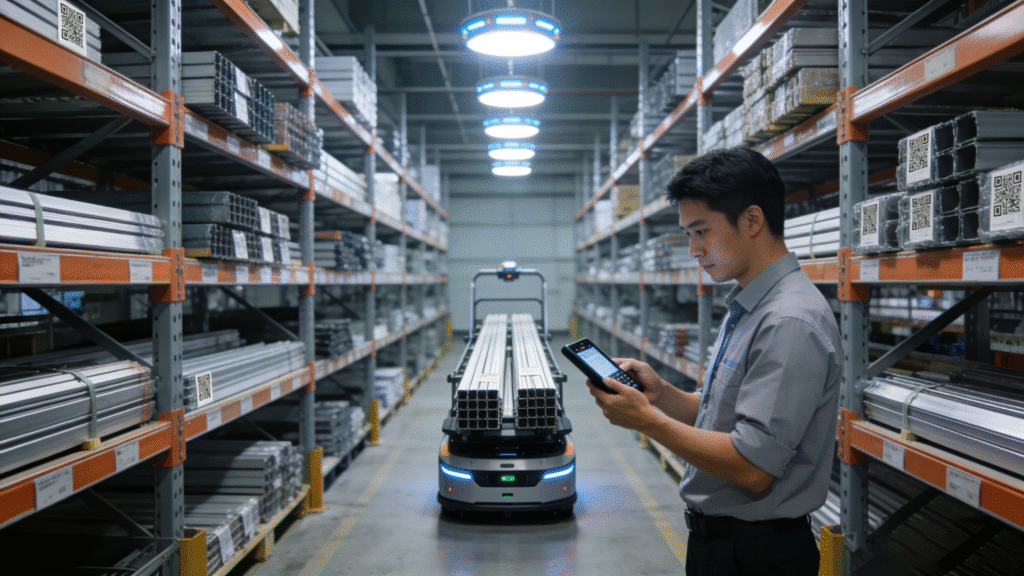
Custom aluminum profiles are widely used in automation frames, conveyor systems, machine enclosures, and industrial workstations. Their strength, modularity, and precision make them ideal for dynamic industrial environments.
Architectural and Construction Applications
In architecture and construction, customized aluminum profiles are essential for aluminum skirting boards, window and door systems, curtain walls, and decorative trims. Customization ensures precise installation and consistent aesthetics.
Furniture and Interior Systems
Modern furniture and interior design increasingly rely on aluminum profiles for modular furniture, display systems, and smart home structures. Lightweight strength and clean design make aluminum a preferred material.
Custom vs. Standard Aluminum Profiles
Standard aluminum profiles are designed for general applications and often require modifications to fit specific projects. These adjustments increase labor cost and reduce efficiency.
Custom aluminum profiles are purpose-built, resulting in fewer components, cleaner assembly, and better performance. For professional applications, customization delivers superior long-term results.
Quality Control and Consistency
Professional aluminum profile manufacturers implement quality control throughout the production process, including:
-
Raw material inspection
-
Dimensional checks during extrusion
-
Surface quality inspection
-
Final inspection before shipment
Consistent quality is essential for large-scale or repeat projects, especially in international markets.
Sustainability and Environmental Benefits
Aluminum is fully recyclable without loss of performance. Custom profile design reduces material waste by using only what is structurally necessary. Lightweight aluminum structures also lower transportation emissions.
These advantages make aluminum profile customization an environmentally responsible choice.
How to Choose a Reliable Aluminum Profile Manufacturer
A professional aluminum extrusion supplier should offer:
-
OEM and ODM customization capability
-
In-house mold development
-
Complete surface finishing lines
-
Stable production capacity
-
Export experience and technical support
An integrated manufacturer ensures better quality control, faster lead times, and consistent results.
Conclusion
Aluminum profile customization combines engineering precision, manufacturing efficiency, and design flexibility. By choosing customized aluminum extrusion, businesses gain products that fit better, perform longer, and scale more efficiently.
For industrial, architectural, and OEM applications, custom aluminum profiles are not just materials—they are engineered solutions that support long-term success.