


Custom Aluminum Profiles: How Tailored Extrusions Improve Efficiency, Design, and Scalability
As global manufacturing and construction standards continue to rise, businesses are increasingly turning to **custom aluminum profiles** to solve structural, design, and production challenges. From industrial systems to architectural applications, customized aluminum extrusion offers a level of precision and flexibility that standard profiles cannot deliver.
This article explains how aluminum profile customization works, why it matters, and how it creates long-term value for manufacturers, architects, and OEM buyers.
—
## Understanding Custom Aluminum Profiles
Custom aluminum profiles are aluminum extrusions designed specifically for a defined application rather than general use. Instead of adapting products to fit standard shapes, the profile itself is engineered to match the product’s functional, structural, and aesthetic requirements.
Customization may include:
* Unique cross-section geometry
* Exact dimensional control
* Specific aluminum alloy selection
* Integrated functional features
* Dedicated surface finishing
This approach transforms aluminum profiles from generic materials into engineered components.
—
## Why Custom Aluminum Extrusion Is Replacing Standard Profiles
Standard aluminum profiles are designed for broad compatibility. While convenient, they often introduce inefficiencies when used in professional or large-scale projects.
Custom aluminum profiles solve these issues by:
* Eliminating unnecessary material
* Reducing secondary machining
* Simplifying assembly processes
* Improving load distribution
* Enhancing visual consistency
For businesses focused on performance and scalability, customization provides a clear advantage.
—
## Design Freedom Without Structural Compromise
One of the most significant benefits of aluminum profile customization is design freedom. Engineers can integrate multiple functions into a single profile, such as:
* Mounting channels
* Reinforcement ribs
* Cable management paths
* Decorative contours
At the same time, aluminum extrusion technology ensures that strength, stability, and manufacturability are maintained. The result is a profile that looks refined while performing reliably under real-world conditions.
—
## Aluminum Alloy Selection for Custom Profiles
Choosing the correct aluminum alloy is critical in customization projects. Different alloys provide different mechanical and surface characteristics.
Common choices include:
* **6063 aluminum** – Excellent surface finish, ideal for architectural and decorative profiles
* **6061 aluminum** – Higher strength, suitable for industrial and structural applications
* **6005A aluminum** – Balanced performance for load-bearing systems
Custom extrusion ensures that alloy selection aligns with actual performance needs rather than generic assumptions.
—
## The Custom Aluminum Profile Development Process
### 1. Application Review
The process begins with understanding how the profile will be used. Load requirements, installation methods, environmental exposure, and aesthetic goals are defined early.
### 2. Profile Engineering
Engineers design the cross-section, optimizing wall thickness, internal cavities, and structural balance to ensure stable extrusion and long-term durability.
### 3. Mold Manufacturing
A dedicated extrusion mold is produced for the profile. Mold quality directly impacts dimensional accuracy and surface consistency.
### 4. Extrusion and Fabrication
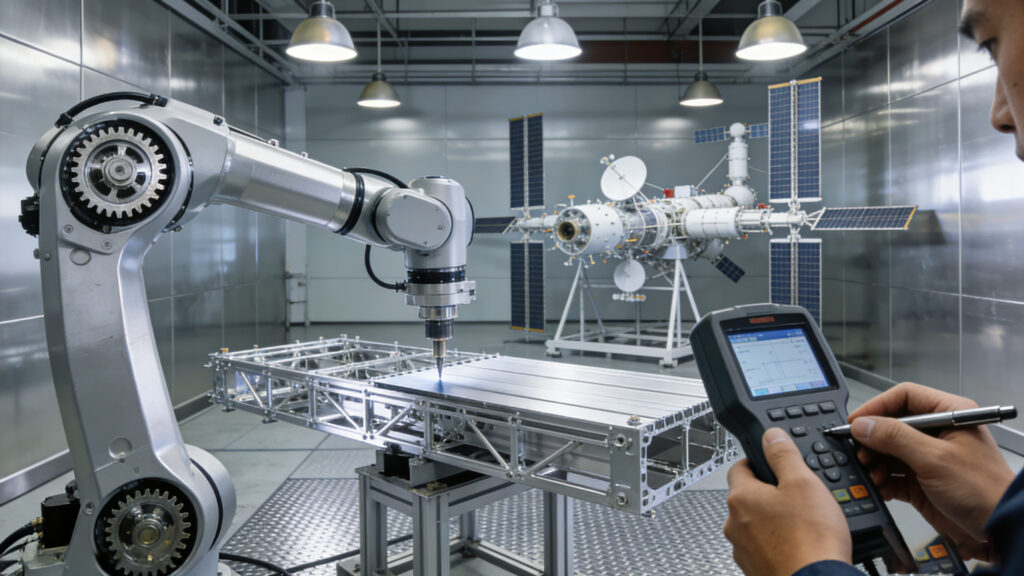
Aluminum billets are extruded into shape, then processed through cutting, drilling, CNC machining, or bending as needed.
### 5. Surface Finishing
Surface treatments such as anodizing or powder coating enhance corrosion resistance and appearance while protecting the aluminum in demanding environments.
—
## Where Custom Aluminum Profiles Are Most Effective
### Industrial Systems and Automation
Custom aluminum profiles are widely used in machine frames, automation lines, workstations, and safety enclosures. Their modular nature supports fast assembly and system reconfiguration.
### Architecture and Construction
In building projects, custom profiles are essential for aluminum skirting boards, window and door systems, curtain walls, and interior trims. Customization ensures clean installation and visual uniformity.
### Furniture and Interior Solutions
Modern furniture and display systems rely on aluminum profiles for lightweight strength and minimalist design. Custom profiles enable hidden connections and slim proportions.
### OEM and Private-Label Products
For OEM manufacturers, proprietary aluminum profiles protect product differentiation and simplify long-term supply chains.
—
## Quality Control and Repeatability
Consistency is one of the most important advantages of aluminum profile customization. Once a profile design is finalized, it can be reproduced with stable dimensions and surface quality across multiple production runs.
Professional manufacturers control quality through:
* Raw material inspection
* In-process dimensional checks
* Surface finish evaluation
* Final inspection before shipment
This repeatability is essential for long-term projects and global distribution.
—
## Sustainability Advantages of Aluminum Profiles
Aluminum is a sustainable material choice. It is fully recyclable without losing mechanical properties. Custom profile design further reduces environmental impact by:
* Minimizing excess material
* Reducing waste from secondary processing
* Lowering transportation weight
For companies focused on sustainability, aluminum profile customization aligns performance with environmental responsibility.
—
## Selecting the Right Custom Aluminum Profile Manufacturer
A reliable aluminum profile manufacturer should provide:
* OEM and ODM customization support
* In-house mold development
* Complete extrusion and finishing capabilities
* Technical engineering assistance
* Stable production capacity and export experience
An integrated supplier ensures better coordination, shorter lead times, and consistent quality.
—
## Long-Term Value of Custom Aluminum Profiles
Custom aluminum profiles are not just components—they are part of a long-term manufacturing strategy. Well-designed profiles:
* Support product upgrades without redesign
* Reduce assembly and labor costs
* Improve system reliability
* Strengthen brand identity
Over time, these benefits significantly outweigh the initial tooling investment.
—
## Final Thoughts
Custom aluminum profiles allow businesses to move beyond compromise. By tailoring extrusion design to real applications, companies achieve better performance, cleaner aesthetics, and more efficient production.
For industrial manufacturers, architects, and OEM buyers, aluminum profile customization offers a proven, scalable solution that supports both current needs and future growth.
—