


As global industries move toward lighter, stronger, and more efficient materials, aluminum extrusion has become a key manufacturing solution. While standard aluminum profiles are widely available, many industries now rely on aluminum profile customization to achieve higher performance and better integration with their products.
Custom aluminum profiles allow engineers and manufacturers to design components that perfectly match structural, functional, and aesthetic requirements. From industrial automation systems to architectural structures, customized aluminum extrusion plays a crucial role in modern manufacturing.
This article explores how customized aluminum profiles are used across industries and why they are becoming the preferred choice for engineers and procurement teams.
What Makes Aluminum Profiles Ideal for Customization
Aluminum is one of the most versatile materials used in manufacturing today. Its unique combination of properties makes it highly suitable for extrusion and customization.
Key advantages include:
-
Lightweight yet strong structural performance
-
Excellent corrosion resistance
-
High recyclability and sustainability
-
Flexible extrusion design capabilities
-
Compatibility with multiple surface treatments
Because aluminum can be easily shaped through the extrusion process, manufacturers can produce complex cross-sections that would be difficult or impossible with other materials.
This flexibility allows companies to create aluminum profiles tailored to their exact technical requirements.
Industrial Automation and Machinery Frames
One of the most common applications of custom aluminum profiles is industrial automation equipment.
Manufacturing systems often require modular structures that can be assembled quickly and modified easily. Custom aluminum extrusion profiles are widely used for:
-
Machine frames
-
Conveyor systems
-
Safety enclosures
-
Workstations
-
Automation platforms
Compared with steel structures, aluminum profiles provide a lighter solution that simplifies installation and transportation while maintaining structural stability.
Additionally, T-slot or modular extrusion designs allow engineers to add accessories, panels, and components without complex welding or machining.
Architectural and Construction Applications
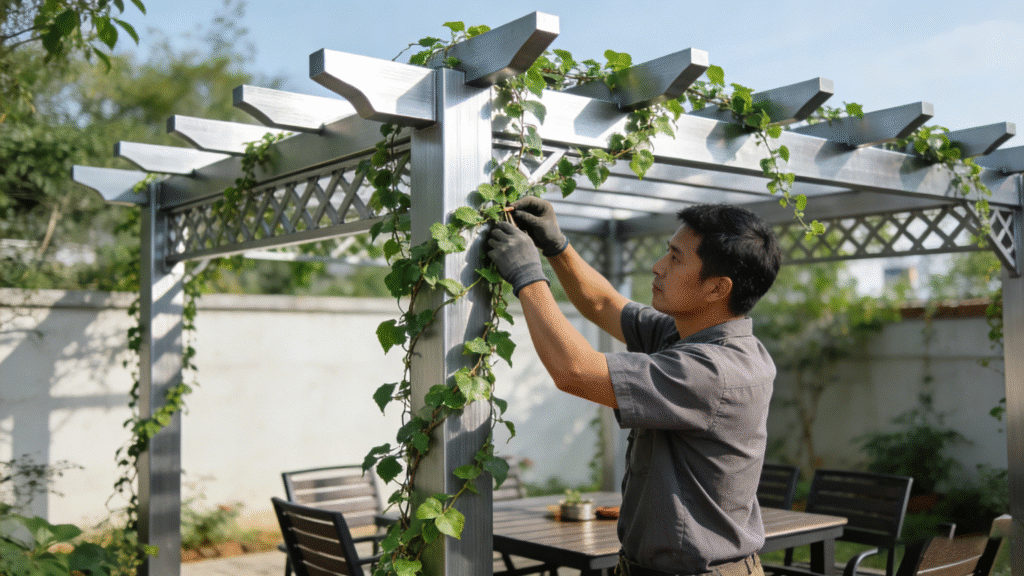
The construction industry has increasingly adopted customized aluminum profiles for both structural and decorative applications.
Architectural aluminum profiles are commonly used in:
-
Curtain wall systems
-
Window and door frames
-
Aluminum skirting boards
-
Decorative wall panels
-
Ceiling support structures
Customization allows architects to achieve specific design requirements such as unique shapes, hidden installation systems, or improved thermal performance.
Aluminum also offers excellent resistance to weather, moisture, and corrosion, making it ideal for both interior and exterior applications.
Transportation and Lightweight Engineering
Weight reduction is a major goal in transportation design. Aluminum profiles help manufacturers reduce overall vehicle weight while maintaining safety and strength.
Custom aluminum extrusion profiles are widely used in:
-
Electric vehicle battery housings
-
Railway structural components
-
Bus body frames
-
Marine structures
-
Cargo systems
Because aluminum is significantly lighter than steel, using customized aluminum profiles can improve energy efficiency and reduce operating costs in transportation systems.
Electronics and Thermal Management
Another growing application of aluminum extrusion customization is in the electronics industry. Aluminum’s excellent thermal conductivity makes it ideal for heat management.
Custom aluminum profiles are frequently used for:
-
Heat sinks
-
LED lighting housings
-
Electronic enclosures
-
Cooling structures for power equipment
Through precise extrusion design, manufacturers can optimize surface area and airflow channels to improve heat dissipation performance.
This is especially important in high-power electronics and LED lighting systems.
Furniture and Interior Design Solutions
Aluminum profiles are also becoming popular in modern furniture and interior systems. Designers value aluminum for its sleek appearance, durability, and compatibility with various finishes.
Common uses include:
-
Modular furniture frames
-
Sliding door systems
-
Decorative trims and profiles
-
Aluminum skirting boards
-
Partition systems
With customization, designers can achieve minimalist structures while maintaining strength and stability.
Surface treatments such as anodizing, powder coating, and wood grain finishes further expand aesthetic possibilities.
Surface Finishing Options for Customized Aluminum Profiles
Surface treatment plays a major role in the final appearance and performance of aluminum profiles.
Common finishing options include:
Anodizing
Creates a durable oxide layer that improves corrosion resistance and produces a clean metallic appearance.
Powder Coating
Provides a wide range of color options and strong surface protection.
Electrophoresis Coating
Offers smooth surfaces with enhanced corrosion resistance, often used for architectural applications.
Wood Grain Transfer
Allows aluminum profiles to replicate natural wood textures while maintaining the durability of metal.
Choosing the appropriate finish depends on the environment, aesthetic goals, and durability requirements.
The Custom Aluminum Extrusion Process
Producing custom aluminum profiles typically involves several stages:
-
Design and Engineering
Engineers analyze the customer’s drawings or functional requirements and design the optimal profile cross-section.
-
Extrusion Die Manufacturing
A custom extrusion die is manufactured to create the desired shape.
-
Aluminum Extrusion
Heated aluminum billets are forced through the die to form the profile.
-
Cooling and Straightening
Profiles are cooled and straightened to maintain dimensional accuracy.
-
Cutting and Surface Finishing
Profiles are cut to length and undergo surface treatment based on project requirements.
-
Inspection and Packaging
Quality inspections ensure dimensional precision and surface consistency before shipment.
Why Custom Aluminum Profiles Support Modern Manufacturing
Customization allows manufacturers to create components that are optimized rather than compromised.
Advantages include:
-
Improved structural efficiency
-
Reduced assembly complexity
-
Faster installation processes
-
Lower long-term production costs
-
Better product differentiation
As industries continue to evolve toward more specialized equipment and designs, the demand for custom aluminum extrusion solutions will continue to grow.
Conclusion
Aluminum profile customization has become an essential solution for modern manufacturing, construction, transportation, and design industries. By leveraging the flexibility of aluminum extrusion, companies can create highly efficient and reliable components tailored to their exact requirements.
For businesses seeking performance, scalability, and design freedom, custom aluminum profiles offer a powerful and future-ready engineering solution.