

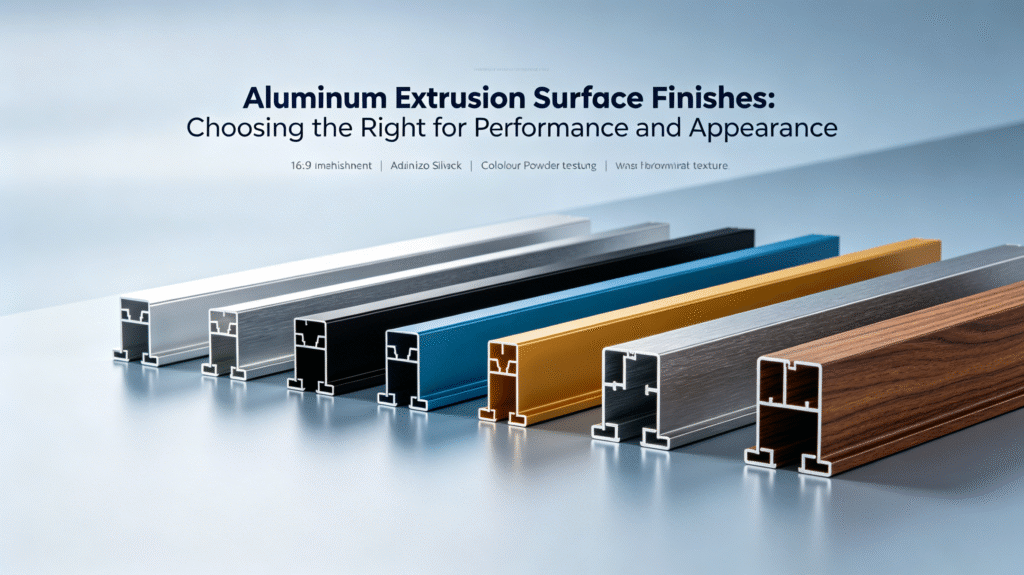
Surface finishing is one of the most important steps in aluminum profile manufacturing. While aluminum naturally provides excellent corrosion resistance and durability, additional surface treatments can significantly improve appearance, performance, and product lifespan.
From architectural systems and industrial equipment to LED lighting and decorative applications, selecting the right aluminum extrusion surface finish helps ensure the product meets both functional and aesthetic requirements.
This guide explains the most common aluminum surface finishes, their advantages, applications, and how to choose the best option for your project.
Why Surface Finishing Matters for Aluminum Profiles
Surface treatment does much more than improve appearance.
Proper finishing can provide:
Enhanced corrosion resistance
Improved wear resistance
Better weather protection
Decorative customization
Increased product lifespan
Easier cleaning and maintenance
Different applications require different finishing solutions.
Common Types of Aluminum Extrusion Surface Finishes
Mill Finish Aluminum
Mill finish refers to aluminum profiles that receive no additional surface treatment after extrusion.
Characteristics
Natural aluminum appearance
Economical option
Basic surface condition
Advantages
Lower cost
Shorter production time
Suitable for secondary processing
Common Applications
Internal structural components
Industrial systems
Parts requiring additional fabrication
Anodized Aluminum Finish
Anodizing is one of the most widely used aluminum finishing methods.
How It Works
An electrochemical process creates a protective oxide layer on the aluminum surface.
Advantages
Excellent corrosion resistance
Improved hardness
Premium metallic appearance
Long-term durability
UV resistance
Common Applications
Window and door systems
Curtain walls
Decorative trim
LED profiles
Powder Coated Aluminum Finish
Powder coating applies electrostatically charged powder that is cured onto the aluminum surface.
Advantages
Wide color selection
Strong weather resistance
Durable coating layer
Decorative flexibility
Common Applications
Architectural systems
Outdoor structures
Aluminum skirting boards
Industrial products
Brushed Aluminum Finish
Brushed finishes create fine surface lines through mechanical processing.
Advantages
Premium visual appearance
Modern industrial style
Fingerprint reduction
Common Applications
Interior decoration
Consumer electronics
Furniture systems
Decorative aluminum profiles
Wood Grain Aluminum Finish
Wood grain finishing creates the appearance of natural wood while maintaining aluminum performance.
Advantages
Natural wood appearance
Moisture resistance
Low maintenance
Long-term durability
Common Applications
Exterior cladding
Decorative facades
Doors and windows
Interior systems
Electrophoresis Finish
Electrophoretic coating applies a transparent protective layer over anodized aluminum.
Advantages
Improved corrosion resistance
Enhanced surface smoothness
Better stain resistance
Common Applications
High-end architectural systems
Decorative products
Polished Aluminum Finish
Polishing creates highly reflective aluminum surfaces.
Advantages
Mirror-like appearance
Attractive decorative effect
Common Applications
Luxury products
Interior decoration
Display systems
Surface Finish Comparison
Finish Type Appearance Durability Corrosion Resistance Color Options
Mill Finish Basic Moderate Moderate Limited
Anodizing Metallic Excellent Excellent Moderate
Powder Coating Decorative Excellent Excellent Extensive
Brushed Premium Good Good Limited
Wood Grain Natural appearance Excellent Excellent Multiple patterns
Electrophoresis Smooth Excellent Excellent Limited
Factors to Consider When Choosing a Surface Finish
Environmental Conditions
Outdoor environments require stronger protection against:
Moisture
UV exposure
Pollution
Salt corrosion
For harsh environments, anodizing and powder coating are often preferred.
Appearance Requirements
Visual design goals vary significantly between projects.
Questions to consider:
Is a metallic appearance preferred?
Is color customization needed?
Should the surface look modern or natural?
Functional Requirements
Certain applications may require:
Scratch resistance
Wear resistance
Easy cleaning
Thermal performance
The finish should support operational needs.
Budget Considerations
Different finishing processes involve different costs.
Generally:
Mill finish is the most economical
Anodizing and powder coating involve moderate cost
Decorative finishes may require additional investment
Industries That Use Surface-Finished Aluminum Profiles
Architecture
Curtain walls
Windows
Doors
Decorative systems
Industrial Automation
Machine frames
Equipment housings
Structural systems
LED Lighting
LED channels
Heat sinks
Decorative lighting systems
Furniture Industry
Cabinet systems
Decorative trim
Modern furniture structures
Transportation
Automotive systems
Rail structures
Lightweight components
Custom Surface Finishing for OEM Projects
Many OEM projects require customized surface solutions.
Customization options may include:
Unique colors
Specialized textures
Custom gloss levels
Branded appearance requirements
Integrated manufacturing services help ensure consistent quality.
Common Mistakes When Selecting Aluminum Finishes
Focusing Only on Appearance
A beautiful finish may not provide sufficient durability for the application.
Ignoring Environmental Conditions
Outdoor applications often require stronger protection.
Overlooking Long-Term Maintenance
Some finishes may require different maintenance levels.
Selecting Unnecessary Premium Finishes
Over-specifying finishes can increase cost without improving performance.
Future Trends in Aluminum Surface Technology
The aluminum industry continues to develop advanced finishing solutions.
Emerging trends include:
Eco-friendly coatings
Self-cleaning surfaces
Smart functional coatings
Improved weather resistance
Enhanced decorative technologies
These innovations continue to expand design possibilities and product performance.
Conclusion
Aluminum extrusion surface finishes play a critical role in determining product appearance, durability, and long-term performance. Whether using anodizing, powder coating, brushed finishes, or decorative treatments, selecting the right finish helps optimize both functionality and aesthetics.
By understanding the characteristics of different surface treatments and working with experienced manufacturers, businesses can create aluminum products that deliver superior performance and lasting value.