

Aluminum anodizing is one of the most widely used surface finishing processes for aluminum profiles. It improves the natural oxide layer on aluminum, providing enhanced corrosion resistance, surface hardness, and a distinctive metallic appearance.
For architectural aluminum, industrial profiles, LED channels, furniture components, and other applications where both appearance and durability are important, anodizing remains a reliable finishing solution.
Unlike paint or powder coating, anodizing does not create a separate layer of paint over the aluminum. Instead, it electrochemically transforms the aluminum surface into a controlled oxide layer.
This article explains how aluminum anodizing works, the main advantages of the process, common anodized finishes, film thickness, quality considerations, and applications.
What Is Aluminum Anodizing?
Anodizing is an electrochemical surface treatment used to increase the thickness of the natural oxide layer on aluminum.
When aluminum is placed in an electrolytic bath and connected as the anode, an electrical current causes a controlled oxidation reaction at the surface.
The resulting anodic oxide layer becomes an integral part of the aluminum profile.
This provides several important characteristics:
-
Improved corrosion resistance
-
Increased surface hardness
-
Better wear resistance
-
Long-lasting appearance
-
Metallic decorative finish
Because the anodized layer is formed from the aluminum itself, it does not behave like conventional paint.
How Does the Aluminum Anodizing Process Work?
A typical anodizing production line involves several stages.
1. Aluminum Extrusion
The process begins with an aluminum profile produced through extrusion.
Surface quality at this stage is extremely important because anodizing can make extrusion defects more visible.
Common surface issues include:
-
Die lines
-
Scratches
-
Material marks
-
Uneven extrusion surfaces
For architectural anodized products, controlling extrusion quality is essential.
2. Cleaning
The aluminum profile is cleaned to remove:
-
Oil
-
Dust
-
Grease
-
Manufacturing residues
A clean surface allows the subsequent chemical treatments to work consistently.
3. Surface Preparation
Depending on the desired appearance, the aluminum may undergo chemical treatments such as etching or brightening.
These processes influence the final surface appearance.
A matte anodized profile, for example, may require different preparation from a bright architectural finish.
4. Anodizing
The prepared aluminum profile is placed into an electrolytic bath.
The controlled electrical process forms the anodic oxide layer on the aluminum surface.
Process parameters such as:
-
Electrical current
-
Voltage
-
Bath temperature
-
Chemical concentration
-
Processing time
must be carefully controlled.
5. Coloring
If a colored anodized finish is required, the aluminum can be colored after anodizing.
Common architectural colors include:
-
Natural silver
-
Champagne
-
Bronze
-
Dark bronze
-
Black
The available color range is generally different from powder coating, which provides a much broader selection of colors and textures.
6. Sealing
After anodizing and coloring, the pores in the oxide layer can be sealed.
Proper sealing improves corrosion resistance and helps stabilize the finished surface.
What Are the Advantages of Anodized Aluminum?
Excellent Corrosion Resistance
Anodizing significantly improves the aluminum surface’s resistance to environmental exposure.
This makes anodized aluminum suitable for many:
-
Architectural applications
-
Outdoor structures
-
Industrial components
-
Transportation applications
The required anodizing specification should always be selected according to the actual environment.
Improved Surface Hardness
The anodized oxide layer is harder than untreated aluminum.
This can improve resistance to everyday surface wear and handling damage.
For applications where abrasion is important, the appropriate anodizing type and film thickness should be selected.
Long-Lasting Metallic Appearance
One of the defining characteristics of anodized aluminum is its natural metallic appearance.
Instead of hiding the aluminum surface under a thick paint layer, anodizing preserves the visual character of the metal.
This is why it is particularly popular in modern architectural design.
Low Maintenance
Anodized aluminum generally requires relatively little maintenance.
The surface can often be cleaned using suitable mild cleaning methods without regular repainting.
This makes anodized profiles attractive for building products that need to maintain their appearance over many years.
What Is Anodizing Thickness?
Anodizing thickness refers to the thickness of the anodic oxide film formed on the aluminum surface.
The appropriate thickness depends on:
-
Application
-
Environmental exposure
-
Required durability
-
Architectural specification
Different markets and projects may specify different anodizing classes or minimum film thicknesses.
For example, some architectural projects may specify relatively thick anodic films for exterior applications.
A manufacturer should confirm the required anodizing thickness before production rather than selecting a thickness solely based on appearance.
Why Is 30 Micron Anodizing Used?
For demanding architectural and outdoor applications, anodic film thicknesses can be specified at relatively high levels.
A 30 μm anodized layer provides a substantial oxide film and may be selected for applications requiring enhanced surface protection.
However, film thickness alone does not determine the complete performance of an anodized aluminum profile.
Other factors include:
-
Aluminum alloy
-
Extrusion surface quality
-
Pretreatment
-
Anodizing process control
-
Coloring method
-
Sealing quality
-
Environmental conditions
Therefore, the complete finishing specification should be evaluated rather than focusing on thickness alone.
Anodized Aluminum Colors
The appearance of anodized aluminum depends on several factors.
These include:
-
Aluminum alloy
-
Extrusion surface
-
Pretreatment
-
Anodizing conditions
-
Coloring process
-
Film thickness
Popular finishes include:
Natural Anodized
Provides a clean silver or aluminum-metal appearance.
Champagne Anodized
Offers a warmer architectural appearance.
Bronze Anodized
Often selected for windows, doors, and architectural systems.
Dark Bronze
Provides a deeper, more premium appearance.
Black Anodized
Creates a modern dark-metal appearance.
Because anodizing interacts with the aluminum itself, color matching can be more challenging than powder coating.
For large architectural projects, manufacturers should establish approved samples before mass production.
Anodized Aluminum vs. Powder Coated Aluminum
Both finishes have advantages.
| Feature | Anodized Aluminum | Powder Coated Aluminum |
|---|---|---|
| Appearance | Metallic | Wide range of colors |
| Surface | Hard anodic oxide | Polymer coating |
| Color selection | More limited | Very extensive |
| Scratch resistance | Generally excellent surface hardness | Depends on coating system |
| Architectural appearance | Natural metallic look | Solid, textured, or special finishes |
| Custom color flexibility | Limited | Excellent |
| Typical applications | Premium architectural systems | Architecture and industrial products |
The correct choice depends on the project’s design and performance requirements.
Which Aluminum Alloys Are Suitable for Anodizing?
Not all aluminum alloys produce exactly the same anodized appearance.
6063 Aluminum
6063 is widely used for architectural extrusion because it offers:
-
Excellent extrudability
-
Good surface quality
-
Good corrosion resistance
-
Attractive anodized appearance
It is therefore commonly selected for anodized architectural profiles.
6061 Aluminum
6061 offers higher mechanical strength but may produce a different anodized appearance depending on the material composition and surface condition.
For projects where appearance consistency is critical, alloy selection should be confirmed before mass production.
Applications of Anodized Aluminum Profiles
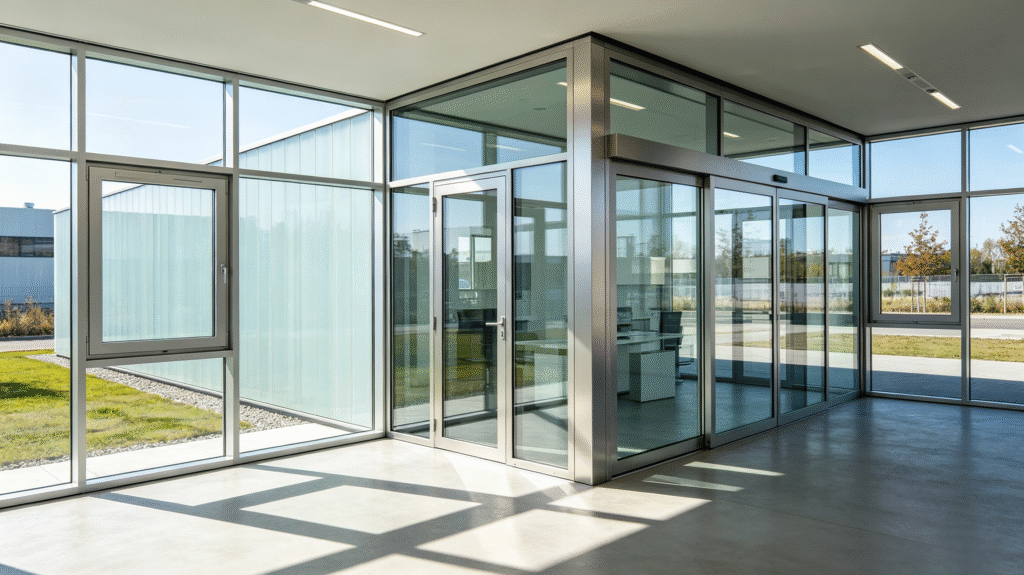
Windows and Doors
Anodized aluminum is widely used for:
-
Window frames
-
Door frames
-
Sliding doors
-
Folding systems
The metallic appearance works particularly well with contemporary architectural designs.
Curtain Walls
Large commercial buildings frequently use anodized aluminum for curtain wall components.
Consistent surface appearance is particularly important because large facade areas can make small color differences noticeable.
LED Profiles
Anodized aluminum is commonly used for LED channels and lighting profiles.
The finish provides a clean appearance while the aluminum itself can also help dissipate heat from LED components.
Industrial Profiles
Anodized industrial profiles can provide a durable and attractive surface for:
-
Machine frames
-
Equipment structures
-
Guide rails
-
Automation systems
Furniture and Interior Products
Anodized aluminum is also used for:
-
Furniture frames
-
Decorative trim
-
Shelving systems
-
Interior architectural components
Factors Affecting Anodizing Quality
High-quality anodized aluminum depends on the entire manufacturing process.
Aluminum Material
Consistent raw material helps maintain consistent surface appearance.
Extrusion Quality
Die condition and extrusion parameters directly influence the final anodized surface.
Chemical Control
Anodizing baths require controlled chemical conditions.
Variations can affect:
-
Film thickness
-
Color
-
Surface appearance
-
Corrosion resistance
Temperature Control
Bath temperature must be maintained within the required process range.
Sealing
Poor sealing can reduce corrosion resistance even when the anodized film itself appears acceptable.
Common Anodizing Problems
Several defects can occur when process control is insufficient.
Uneven Color
Possible causes include:
-
Alloy variation
-
Uneven pretreatment
-
Inconsistent anodizing conditions
-
Different extrusion batches
Surface Streaks
Extrusion or pretreatment problems may become more visible after anodizing.
Insufficient Film Thickness
Improper process parameters can result in a film below the required specification.
Poor Sealing
Insufficient sealing can negatively affect corrosion resistance.
Professional process monitoring is therefore essential.
How to Specify Anodized Aluminum Profiles
When requesting anodized aluminum from a manufacturer, provide as much information as possible.
Important specifications include:
-
Aluminum alloy
-
Temper
-
Profile dimensions
-
Anodizing color
-
Film thickness
-
Surface appearance
-
Required tolerances
-
Application environment
-
Inspection requirements
For color-sensitive projects, an approved physical sample can be especially useful.
Why Choose an Integrated Aluminum Manufacturer?
Anodizing quality is closely connected to extrusion quality.
A manufacturer that controls both processes can better manage the entire production chain:
Aluminum billet → extrusion → surface preparation → anodizing → coloring → sealing → inspection
This integrated approach can help reduce variation between extrusion and finishing stages.
Additional services such as CNC machining, cutting, powder coating, and assembly can further simplify the supply chain.
Conclusion
Aluminum anodizing remains one of the most reliable finishing technologies for aluminum extrusion products. It enhances corrosion resistance, improves surface hardness, and preserves the natural metallic character of aluminum.
For architectural windows, doors, curtain walls, LED profiles, industrial frames, and decorative components, anodizing can provide a durable and visually appealing finish.
However, high-quality anodized aluminum depends on more than simply specifying a film thickness. Alloy selection, extrusion quality, pretreatment, chemical control, coloring, sealing, and inspection all contribute to the final result.
For OEM and ODM customers, working with an experienced aluminum extrusion manufacturer with integrated anodizing capabilities can make it easier to achieve consistent quality from the initial profile design through final production.