


Selecting the right aluminum extrusion manufacturer is one of the most important decisions for companies that rely on aluminum components. Whether the application involves construction, industrial equipment, transportation, or interior systems, the quality and reliability of the supplier directly impact project success.
Because aluminum profile customization requires engineering expertise, precise manufacturing, and strict quality control, buyers must carefully evaluate potential suppliers before committing to long-term cooperation.
This guide explains the key factors businesses should consider when choosing a manufacturer for custom aluminum profiles.
Manufacturing Capabilities and Production Capacity
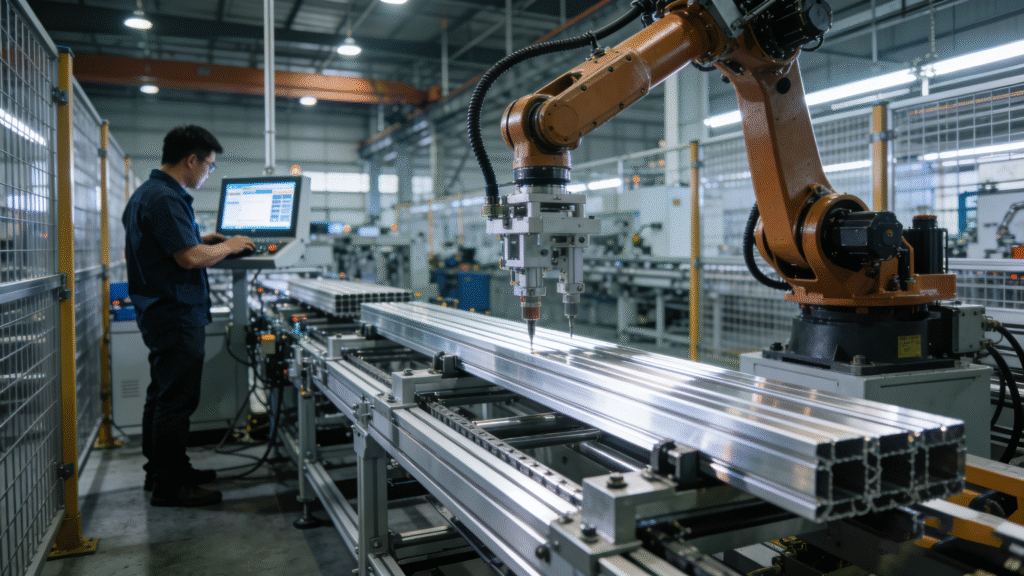
The first aspect to evaluate is the manufacturer’s production capability. Aluminum extrusion requires specialized equipment, including extrusion presses, die manufacturing tools, and finishing facilities.
A reliable aluminum extrusion manufacturer should offer:
-
Multiple extrusion press sizes
-
In-house mold design and production
-
Precision cutting and machining services
-
Surface treatment lines such as anodizing and powder coating
-
Stable annual production capacity
Manufacturers with integrated production lines can control quality more effectively and shorten lead times for custom orders.
Engineering and Customization Expertise
Custom aluminum profiles require more than just manufacturing equipment. Engineering expertise plays a crucial role in transforming product requirements into a practical extrusion design.
Experienced manufacturers provide technical support in areas such as:
-
Profile structure optimization
-
Wall thickness balance for extrusion stability
-
Alloy selection recommendations
-
Cost-efficient design adjustments
Working with a supplier that offers strong engineering support helps prevent design problems and production delays.
Quality Control and Certification
Quality assurance is critical for aluminum extrusion projects, especially when components are used in construction or industrial equipment.
Professional aluminum profile manufacturers typically maintain strict quality control systems, including:
-
Raw material inspection
-
Dimensional measurement during production
-
Surface quality inspection
-
Mechanical performance testing
International certifications can also provide additional assurance. Many global buyers prefer suppliers that follow recognized standards such as ISO quality systems.
Consistency across multiple production batches is especially important for long-term projects.
Surface Finishing Capabilities
Surface finishing is an essential part of aluminum profile manufacturing. Different applications require different surface treatments to enhance durability and appearance.
A capable aluminum extrusion supplier should provide multiple finishing options, such as:
Anodizing
Anodized aluminum profiles offer excellent corrosion resistance and a refined metallic appearance.
Powder Coating
Powder coating provides a wide range of color choices and durable protective layers.
Electrophoresis Coating
This finishing process improves corrosion resistance and produces smooth surfaces suitable for architectural applications.
Wood Grain Finishing
Wood grain transfer technology allows aluminum profiles to replicate natural wood textures while maintaining metal durability.
Having these processes available within the same factory improves efficiency and ensures consistent quality.
Mold Development and Custom Tooling
For custom aluminum profiles, the extrusion die is one of the most important elements in the manufacturing process. The die determines the accuracy of the profile’s cross-section and the overall production efficiency.
A professional manufacturer should offer:
-
Precision mold design
-
High-quality die steel materials
-
Experienced mold technicians
-
Regular die maintenance and optimization
Proper mold development ensures stable production and reduces defects during extrusion.
Lead Time and Supply Chain Reliability
Delivery reliability is a key factor in supplier selection. Delays in aluminum profile production can affect entire construction or manufacturing schedules.
When evaluating potential suppliers, buyers should consider:
-
Average mold development time
-
Production lead time for extrusion orders
-
Surface finishing capacity
-
Packaging and export logistics experience
Manufacturers with established export systems can provide more predictable shipping schedules and documentation support.
Experience in International Markets
Suppliers with experience serving global customers are often better prepared to meet international standards and communication expectations.
Important advantages include:
-
Familiarity with export documentation
-
Understanding of international quality requirements
-
Experience with OEM and ODM cooperation
-
English communication capability
This experience reduces misunderstandings and ensures smoother project coordination.
Cost Efficiency Beyond Unit Price
While price is an important factor, it should not be the only consideration when choosing an aluminum extrusion manufacturer.
A lower unit price may come with hidden risks such as:
-
Inconsistent profile dimensions
-
Poor surface finish quality
-
Delayed shipments
-
Limited engineering support
Instead, buyers should evaluate the overall value, including reliability, service, and long-term cooperation potential.
Long-Term Partnership Potential
Custom aluminum profile projects often involve long product lifecycles. Choosing a supplier that supports long-term collaboration can provide significant advantages.
Reliable manufacturers can assist with:
-
Future design improvements
-
Production scaling as demand grows
-
Stable supply across multiple years
-
Technical upgrades for new product versions
A strong partnership helps businesses maintain consistent quality and supply stability.
Final Thoughts
Choosing the right aluminum extrusion manufacturer is a strategic decision that influences product performance, production efficiency, and supply chain reliability.
Companies that carefully evaluate manufacturing capabilities, engineering expertise, quality control systems, and long-term cooperation potential are more likely to achieve successful results with custom aluminum profiles.
With the right partner, aluminum extrusion customization becomes not only a manufacturing solution but also a foundation for innovation and growth.