




As electronic devices become smaller, faster, and more powerful, effective thermal management has become one of the biggest challenges facing modern product designers. From LED lighting and power electronics to telecommunications equipment and electric vehicles, **aluminum heat sink extrusions** play a critical role in dissipating heat and ensuring long-term system reliability.
Thanks to aluminum’s excellent thermal conductivity, lightweight properties, corrosion resistance, and design flexibility, extruded aluminum heat sinks have become the preferred solution across numerous industries.
This guide explores how aluminum heat sink extrusions work, their advantages, common applications, design considerations, and how to choose the right manufacturing partner.
—
# What Is an Aluminum Heat Sink?
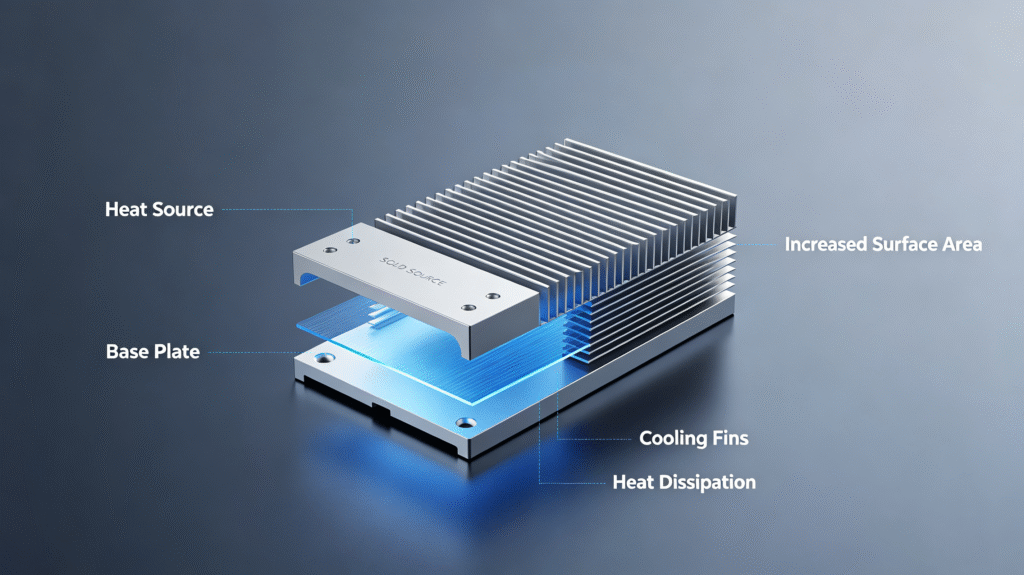
A heat sink is a passive cooling device designed to transfer heat away from electronic components and release it into the surrounding air.
An aluminum heat sink extrusion typically consists of:
* A solid base that contacts the heat source
* Multiple fins that increase surface area
* Mounting features for assembly
* Optional machining for customized applications
The greater the exposed surface area, the more efficiently heat can be dissipated.
—
# Why Aluminum Is the Best Material for Heat Sinks
Although copper offers higher thermal conductivity, aluminum has become the industry standard for most heat sink applications because it provides the best balance of performance, weight, manufacturability, and cost.
## Excellent Thermal Conductivity
Aluminum efficiently transfers heat away from sensitive components.
Benefits include:
* Lower operating temperatures
* Improved equipment reliability
* Better energy efficiency
* Longer component lifespan
Efficient heat dissipation helps prevent overheating and performance degradation.
—
## Lightweight Construction
Compared with many other metals, aluminum offers outstanding strength while remaining lightweight.
Advantages include:
* Easier transportation
* Reduced product weight
* Simplified installation
* Lower structural loads
This is particularly important for portable devices and electric vehicles.
—
## Outstanding Extrudability
Aluminum can be extruded into highly complex shapes.
Manufacturers can design:
* Straight fins
* Pin fins
* Hollow structures
* Integrated mounting channels
* Customized cooling geometries
Complex cross-sections improve cooling efficiency while reducing manufacturing costs.
—
## Excellent Corrosion Resistance
Aluminum naturally develops a protective oxide layer that resists corrosion.
This makes aluminum heat sinks suitable for:
* Outdoor equipment
* Industrial environments
* Marine applications
* High-humidity conditions
Additional surface treatments further improve durability.
—
# How Aluminum Heat Sink Extrusions Are Manufactured
## Step 1: Aluminum Billet Preparation
High-quality aluminum billets are selected according to the required alloy and application.
The most commonly used alloy for heat sinks is **6063 aluminum**, known for its excellent extrusion characteristics and good thermal performance.
—
## Step 2: Extrusion
The heated billet is forced through a precision extrusion die.
This process creates the complete heat sink profile in a single operation.
Extrusion enables manufacturers to produce:
* Thin cooling fins
* Complex cross-sections
* Long continuous profiles
—
## Step 3: Cooling and Straightening
After extrusion, the profile is cooled, stretched, and straightened to maintain dimensional accuracy.
—
## Step 4: CNC Machining
Additional machining may include:
* Precision cutting
* Drilling
* Tapping
* Milling
* Mounting holes
These operations prepare the heat sink for final assembly.
—
## Step 5: Surface Finishing
Depending on customer requirements, common finishes include:
### Anodizing
Provides:
* Improved corrosion resistance
* Increased surface hardness
* Attractive appearance
* Better wear resistance
Black anodizing is especially popular because darker surfaces can improve thermal radiation in some applications.
—
### Powder Coating
Powder coating is generally used when appearance or environmental protection is the priority rather than maximum thermal performance.
—
# Common Applications of Aluminum Heat Sink Extrusions
## LED Lighting
LED systems generate heat during operation.
Aluminum heat sinks help:
* Extend LED lifespan
* Maintain brightness consistency
* Improve lighting efficiency
Applications include:
* LED strip lighting
* Street lights
* Floodlights
* Commercial lighting fixtures
—
## Power Electronics
High-power electronic devices require efficient cooling.
Typical products include:
* Power supplies
* Inverters
* Motor drives
* Frequency converters
Reliable thermal management improves operational stability.
—
## Electric Vehicles
EVs rely heavily on aluminum heat sinks for:
* Battery cooling
* Power control modules
* Charging systems
* DC-DC converters
Effective heat dissipation improves battery safety and system efficiency.
—
## Telecommunications Equipment
Communication systems often operate continuously.
Heat sinks are widely used in:
* 5G base stations
* Network equipment
* Signal amplifiers
* Data transmission devices
Stable operating temperatures improve system reliability.
—
## Industrial Automation
Industrial control systems commonly use aluminum heat sinks for:
* Servo drives
* PLC controllers
* Industrial computers
* Automation equipment
—
# Design Considerations for Custom Heat Sink Extrusions
## Fin Geometry
Fin design directly affects cooling performance.
Engineers must consider:
* Fin height
* Fin spacing
* Fin thickness
* Airflow direction
Proper fin geometry improves heat transfer efficiency.
—
## Airflow Conditions
Heat sink performance depends on whether cooling is:
* Natural convection
* Forced-air cooling
* Fan-assisted ventilation
The cooling method influences profile design.
—
## Mounting Method
Designers should consider:
* Screw mounting
* Clip mounting
* Adhesive attachment
* Thermal interface materials
Secure contact with the heat source is essential for efficient heat transfer.
—
## Material Selection
While 6063 aluminum is widely used, certain applications may require other alloys depending on strength or machining requirements.
Selecting the right alloy helps balance thermal performance and manufacturing efficiency.
—
# Advantages of Custom Aluminum Heat Sink Extrusions
Custom extrusion provides several important benefits.
## Optimized Cooling Performance
Profiles can be designed specifically for the customer’s heat load and airflow conditions.
—
## Reduced Assembly Costs
Integrated mounting features eliminate unnecessary components.
—
## Improved Product Appearance
Custom designs enhance the visual appeal of finished products while maintaining functionality.
—
## Better Brand Differentiation
OEM manufacturers can develop proprietary heat sink profiles that distinguish their products in competitive markets.
—
# How to Choose a Heat Sink Extrusion Manufacturer
When selecting a supplier, consider the following:
## Extrusion Experience
Choose a manufacturer with expertise in producing thin-fin and high-precision heat sink profiles.
—
## Engineering Support
An experienced engineering team can help optimize:
* Thermal performance
* Material usage
* Manufacturing efficiency
* Production costs
—
## CNC Machining Capability
Integrated machining services improve quality control and reduce lead times.
—
## Quality Assurance
Professional manufacturers perform inspections covering:
* Profile dimensions
* Surface finish
* Straightness
* Machining accuracy
* Material certification
—
# Future Trends in Aluminum Heat Sink Technology
As electronics continue to evolve, aluminum heat sink technology is advancing rapidly.
Emerging trends include:
* Ultra-high-density fin designs
* AI-assisted thermal simulation
* Integrated liquid cooling solutions
* Lightweight thermal management systems
* Sustainable aluminum manufacturing
* Advanced surface treatments for enhanced heat dissipation
These innovations will continue expanding the role of aluminum extrusions in next-generation electronic products.
—
# Conclusion
Aluminum heat sink extrusions have become indispensable in modern thermal management. Their excellent thermal conductivity, lightweight construction, corrosion resistance, and design flexibility make them the preferred solution for LED lighting, power electronics, electric vehicles, telecommunications, and industrial automation.
By partnering with an experienced aluminum extrusion manufacturer, companies can develop custom heat sink solutions that maximize cooling performance, reduce manufacturing costs, and improve overall product reliability.
As electronic devices become increasingly powerful and compact, custom aluminum heat sink extrusions will continue to play a vital role in ensuring efficient and reliable thermal management.