




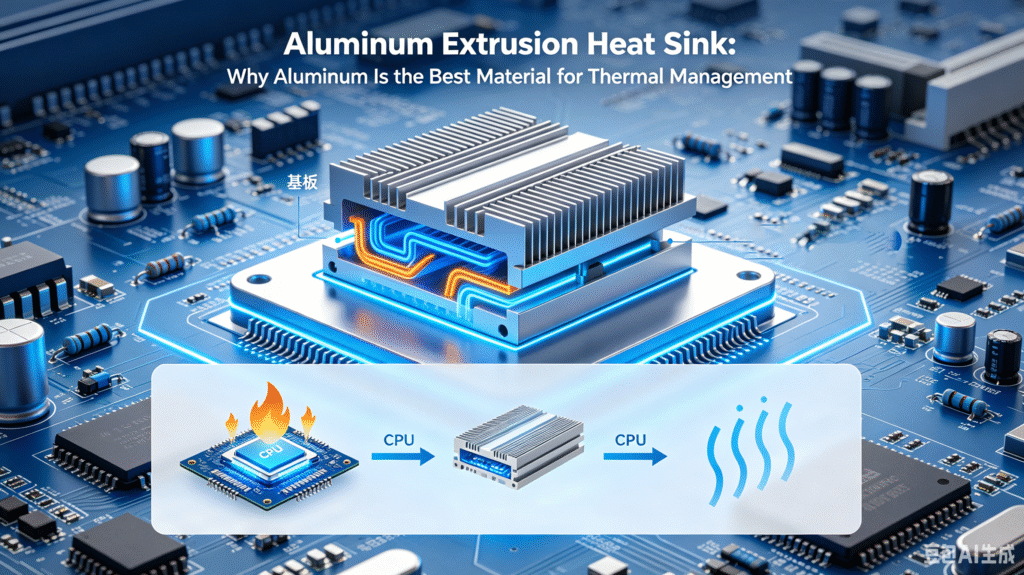
As electronic devices become more powerful and compact, efficient heat dissipation has become increasingly important. From LED lighting and power supplies to industrial electronics and computer systems, overheating can significantly reduce performance and shorten product lifespan.
This is why aluminum extrusion heat sinks are widely used across modern industries. Aluminum offers an excellent balance of thermal conductivity, lightweight structure, cost efficiency, and manufacturing flexibility.
This guide explains how aluminum extrusion heat sinks work, their advantages, common applications, and how custom aluminum profiles improve thermal management performance.
What Is an Aluminum Heat Sink?
A heat sink is a component designed to absorb and dissipate heat away from electronic devices or systems.
An aluminum extrusion heat sink is manufactured by extruding aluminum into a profile shape with fins or other cooling structures that increase surface area for heat transfer.
The main purpose of a heat sink is to:
Reduce operating temperature
Improve device stability
Extend component lifespan
Prevent overheating damage
Why Aluminum Is Used for Heat Sinks
Aluminum has become the preferred material for heat sink applications because it combines multiple advantages.
Excellent Thermal Conductivity
Aluminum transfers heat efficiently, allowing heat generated by electronic components to dissipate quickly into the surrounding air.
This helps maintain stable operating temperatures.
Lightweight Structure
Compared to copper or steel, aluminum is much lighter.
This makes aluminum heat sinks ideal for:
Consumer electronics
LED lighting systems
Automotive electronics
Portable devices
Cost Efficiency
Aluminum is more cost-effective than copper while still providing strong thermal performance.
This balance makes aluminum suitable for both consumer and industrial applications.
Corrosion Resistance
Aluminum naturally resists corrosion, improving durability in demanding environments.
Easy Extrusion Processing
Aluminum extrusion allows manufacturers to create complex fin structures and custom cooling profiles efficiently.
How Aluminum Extrusion Heat Sinks Work
Heat sinks operate through three main stages:
1. Heat Absorption
Heat generated by electronic components transfers into the aluminum base.
2. Heat Distribution
The aluminum structure spreads heat throughout the profile.
3. Heat Dissipation
Fins and cooling surfaces release heat into the surrounding air.
The larger the surface area, the better the cooling performance.
Advantages of Extruded Aluminum Heat Sinks
Customizable Fin Design
Extrusion allows for precise customization of:
Fin height
Fin spacing
Base thickness
Profile geometry
This flexibility helps optimize airflow and cooling efficiency.
High Production Efficiency
Extrusion is highly efficient for producing continuous heat sink profiles in large quantities.
Consistent Quality
Extruded profiles maintain uniform dimensions and stable thermal performance.
Reduced Manufacturing Cost
Compared with CNC-machined heat sinks, extrusion reduces material waste and production cost.
Common Types of Aluminum Heat Sink Profiles
Straight Fin Heat Sinks
The most common design featuring parallel fins.
Advantages
Simple structure
Efficient airflow
Cost-effective production
Pin Fin Heat Sinks
Use multiple pin-shaped structures instead of straight fins.
Advantages
Better airflow in multiple directions
Improved cooling in confined spaces
Flared Fin Heat Sinks
Fins widen outward to improve airflow and heat transfer.
Custom Heat Sink Profiles
Custom aluminum extrusion allows manufacturers to develop specialized thermal management systems for unique applications.
Applications of Aluminum Extrusion Heat Sinks
LED Lighting Systems
LEDs generate concentrated heat that must be managed effectively.
Aluminum heat sinks help:
Improve LED lifespan
Maintain brightness consistency
Prevent overheating
Power Electronics
Applications include:
Power supplies
Inverters
Voltage regulators
These systems require stable thermal control for reliable operation.
Computer and Communication Equipment
Heat sinks are widely used in:
CPUs and GPUs
Servers
Networking equipment
Automotive Electronics
Modern vehicles use electronic systems that generate significant heat.
Aluminum heat sinks support:
EV battery systems
Motor controllers
Automotive lighting
Industrial Equipment
Industrial automation systems often require thermal management for:
Control systems
Sensors
Power modules
Surface Finishes for Aluminum Heat Sinks
Surface treatment can improve both appearance and performance.
Anodizing
Black anodizing is commonly used because it improves:
Corrosion resistance
Heat radiation efficiency
Surface durability
Powder Coating
Used mainly for appearance, though thick coatings may slightly reduce thermal efficiency.
Designing an Effective Heat Sink
Several factors influence heat sink performance:
Surface Area
More fins and larger surfaces improve heat dissipation.
Airflow
Proper spacing between fins allows efficient airflow.
Material Thickness
Base thickness affects heat transfer and structural strength.
Environmental Conditions
Ambient temperature and ventilation impact cooling performance.
Custom Aluminum Extrusion for Thermal Management
Custom extrusion offers major advantages for thermal applications:
Optimized cooling performance
Integration with product housing
Reduced assembly complexity
Better product aesthetics
OEM manufacturers often use custom heat sink profiles to improve product differentiation.
Aluminum vs Copper Heat Sinks
Feature Aluminum Copper
Weight Lightweight Heavy
Thermal Conductivity Very good Excellent
Cost Lower Higher
Machinability Excellent More difficult
Corrosion Resistance Excellent Moderate
While copper offers slightly better conductivity, aluminum provides a better balance of cost, weight, and manufacturability.
Conclusion
Aluminum extrusion heat sinks provide an efficient, lightweight, and cost-effective solution for thermal management across a wide range of industries. Their excellent thermal conductivity, customizable design, and manufacturing efficiency make them ideal for modern electronic and industrial systems.
As electronic devices continue to become more advanced and compact, custom aluminum heat sink profiles will remain essential for improving reliability, performance, and long-term durability.