



As the global demand for renewable energy continues to grow, solar power systems have become one of the fastest-growing industries worldwide. In modern photovoltaic installations, aluminum profiles for solar panel systems play a critical role in providing structural support, corrosion resistance, and long-term durability.
From rooftop solar installations to large-scale solar farms, aluminum extrusion has become the preferred material for mounting systems and solar framework structures.
This guide explains why aluminum is widely used in solar energy applications and how custom aluminum extrusion supports efficient and reliable solar panel systems.
Why Aluminum Is Used in Solar Panel Systems
Solar installations must withstand long-term outdoor exposure, including:
- Rain
- UV radiation
- Wind
- Temperature changes
- Humidity and corrosion
Aluminum offers several advantages that make it ideal for these demanding environments.
Lightweight Structure
One of aluminum’s biggest advantages is its low weight.
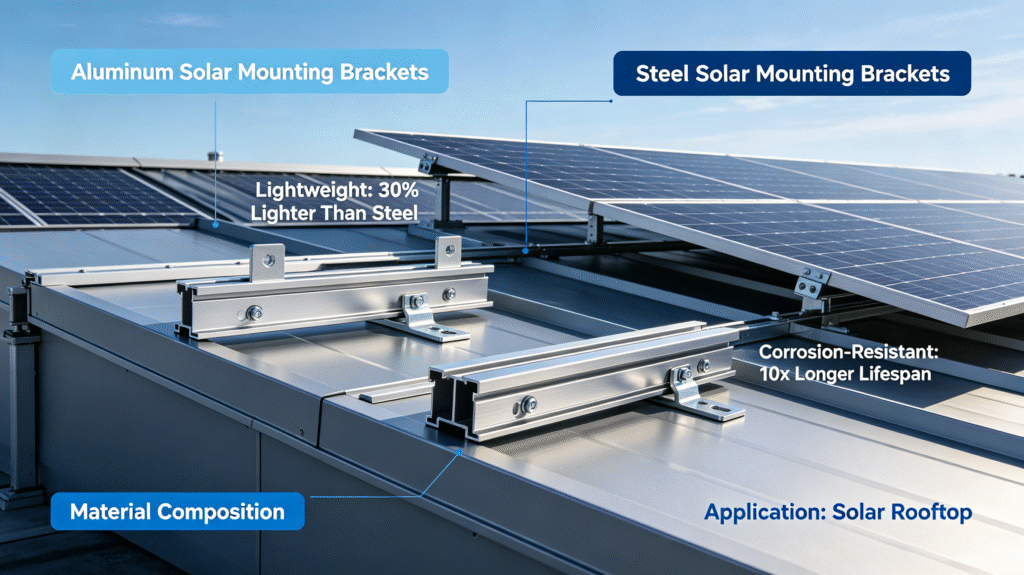
Compared with steel, aluminum is much lighter, which helps:
- Reduce roof load
- Simplify transportation
- Improve installation efficiency
This is especially important for rooftop solar systems.
Excellent Corrosion Resistance
Aluminum naturally forms a protective oxide layer that resists corrosion.
This makes it suitable for:
- Coastal environments
- Humid climates
- Outdoor installations with long service life requirements
Unlike untreated steel, aluminum does not rust.
High Strength-to-Weight Ratio
Although lightweight, aluminum still provides strong structural performance for solar mounting systems.
This balance helps create durable yet efficient support structures.
Long Lifespan
Solar systems are designed for long-term operation, often exceeding 20 years.
Aluminum profiles offer:
- Excellent weather resistance
- Low maintenance requirements
- Stable long-term performance
Common Aluminum Profiles Used in Solar Systems
Solar Panel Mounting Rails
Mounting rails are among the most important aluminum components in solar installations.
Functions
- Support solar panels
- Maintain alignment
- Distribute structural load
Advantages
- Easy installation
- Modular compatibility
- Corrosion resistance
Aluminum Frame Profiles for Solar Panels
Many photovoltaic panels use aluminum frames to protect the glass and internal components.
Benefits
- Lightweight protection
- Structural rigidity
- Improved durability
Ground Mount Structural Profiles
Large solar farms often use aluminum extrusion for support structures and framework systems.
Advantages
- Reduced transportation weight
- Easier assembly
- Long-term outdoor durability
Adjustable Mounting Systems
Custom aluminum profiles are also used in adjustable solar mounting systems that optimize panel angle and sunlight exposure.
Advantages of Aluminum Extrusion in Solar Applications
Design Flexibility
Aluminum extrusion allows manufacturers to create:
- Complex structural profiles
- Integrated mounting channels
- Lightweight reinforcement structures
This flexibility improves installation efficiency and system performance.
Fast Assembly
Extruded aluminum profiles can include:
- Pre-designed connection slots
- Integrated fastening systems
- Modular assembly features
This significantly reduces installation time.
Reduced Maintenance
Aluminum’s corrosion resistance minimizes maintenance needs over the lifespan of the solar system.
Recyclability and Sustainability
Aluminum is highly recyclable and supports environmentally friendly manufacturing practices.
This aligns well with the sustainability goals of the solar industry.
Surface Finishes for Solar Aluminum Profiles
Surface treatment further improves durability and appearance.
Anodized Aluminum
Anodizing is widely used in solar systems because it provides:
- Enhanced corrosion resistance
- Improved weather durability
- Professional appearance
Mill Finish Aluminum
Some internal structural components use mill finish profiles when additional protection is unnecessary.
Powder Coating
Powder coating may be used when color customization or extra environmental protection is required.
Applications of Aluminum Profiles in Solar Energy
Residential Rooftop Solar Systems
Aluminum profiles are commonly used for:
- Mounting rails
- Panel frames
- Roof support systems
Commercial Solar Installations
Commercial projects require strong yet lightweight support systems for larger panel arrays.
Utility-Scale Solar Farms
Large solar farms use industrial aluminum structures for:
- Ground-mounted systems
- Tracking systems
- Support frameworks
Portable Solar Equipment
Lightweight aluminum profiles are ideal for portable and mobile solar systems.
Aluminum vs Steel for Solar Mounting Systems
| Feature | Aluminum | Steel |
|---|---|---|
| Weight | Lightweight | Heavy |
| Corrosion Resistance | Excellent | Requires coating |
| Installation | Easier | More labor-intensive |
| Maintenance | Low | Higher |
| Cost | Higher upfront | Lower upfront |
Although steel may have lower initial material cost, aluminum often provides better long-term value due to reduced maintenance and easier installation.
Custom Aluminum Extrusion for Solar Projects
Custom extrusion allows manufacturers to develop specialized solar profiles tailored to project needs.
Custom features may include:
- Integrated cable management
- Specialized mounting channels
- Reinforced structures
- Lightweight optimized geometry
OEM solar manufacturers often use custom profiles to improve system efficiency and branding.
Future Trends in Solar Aluminum Profiles
As solar technology continues to evolve, aluminum extrusion systems are becoming more advanced.
Key trends include:
- Lightweight high-strength structures
- Smart mounting systems
- Faster modular installation
- Sustainable recyclable materials
Aluminum will continue to play a major role in renewable energy infrastructure.
Choosing the Right Aluminum Supplier for Solar Projects
When sourcing aluminum profiles for solar systems, buyers should consider:
- Manufacturing capability
- Alloy quality
- Corrosion resistance standards
- Surface finishing quality
- Custom extrusion experience
Working with an experienced aluminum extrusion manufacturer ensures reliable performance and long-term durability.
Conclusion
Aluminum profiles are essential components in modern solar energy systems. Their lightweight structure, corrosion resistance, strength, and flexibility make them ideal for photovoltaic mounting systems and solar infrastructure.
As the renewable energy industry continues to grow, custom aluminum extrusion will remain a key technology supporting efficient, durable, and sustainable solar installations worldwide.