

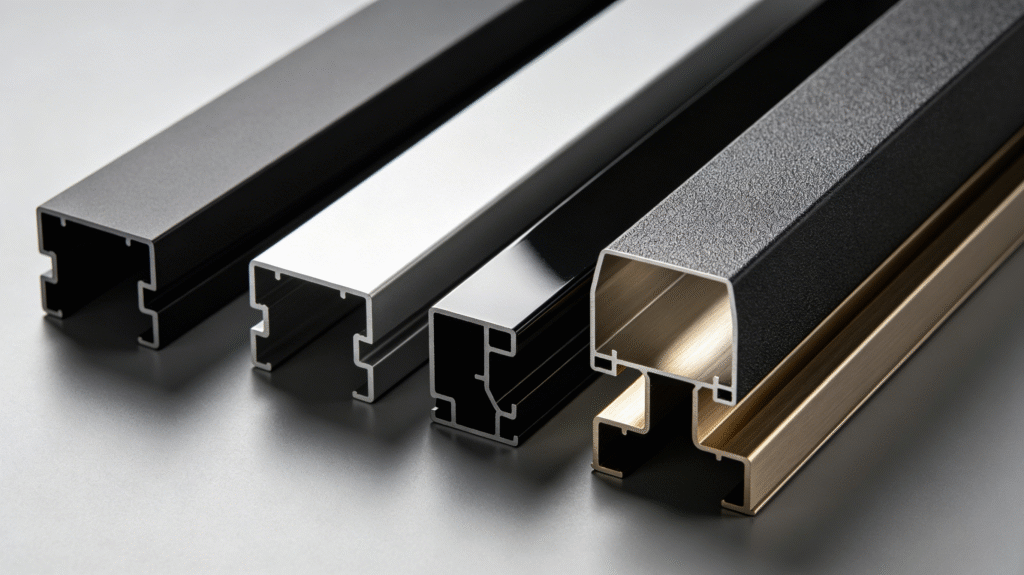
Powder coating is one of the most widely used finishing methods in the aluminum extrusion industry. Whether for architectural projects, industrial equipment, furniture, or decorative applications, powder coated aluminum profiles offer an excellent combination of durability, appearance, and long-term performance.
As global demand for high-quality aluminum products continues to grow, powder coating has become a preferred surface treatment for manufacturers, architects, contractors, and OEM brands.
This guide explains everything you need to know about powder coated aluminum profiles, including the process, advantages, applications, and key factors to consider when selecting a supplier.
What Is Powder Coating?
Powder coating is a dry finishing process in which electrostatically charged powder particles are applied to the surface of aluminum profiles.
After application, the coated profiles are cured in a high-temperature oven.
During curing:
- The powder melts
- Forms a uniform coating
- Bonds tightly to the aluminum surface
The result is a durable, attractive finish that provides both protection and visual appeal.
Why Powder Coating Is Used on Aluminum Profiles
Aluminum naturally offers excellent corrosion resistance, but powder coating adds an additional layer of protection and customization.
Manufacturers use powder coating to achieve:
- Enhanced durability
- Color customization
- Improved weather resistance
- Decorative finishes
- Long-term performance
This makes powder coated aluminum suitable for both indoor and outdoor applications.
The Powder Coating Process
Step 1: Surface Preparation
Proper preparation is essential for coating performance.
The aluminum surface is cleaned to remove:
- Oil
- Dirt
- Oxidation
- Manufacturing residues
A conversion coating may also be applied to improve adhesion.
Step 2: Powder Application
Electrostatic spray equipment applies powder particles evenly across the profile surface.
Because the powder is electrically charged, it adheres effectively to the aluminum.
Step 3: Curing
The coated profiles are placed in curing ovens.
Typical curing temperatures range between:
356°F to 428°F (180°C to 220°C)
During this stage, the powder melts and forms a smooth, durable coating.
Step 4: Inspection
Finished profiles undergo quality checks to verify:
- Coating thickness
- Color consistency
- Surface appearance
- Adhesion performance
Advantages of Powder Coated Aluminum Profiles
Superior Corrosion Resistance
Powder coating creates a protective barrier against:
- Moisture
- Salt exposure
- Industrial pollutants
- Harsh weather conditions
This significantly extends product lifespan.
Excellent UV Resistance
High-quality powder coatings resist fading and chalking caused by sunlight exposure.
This is especially important for:
- Building facades
- Window systems
- Outdoor structures
Wide Color Selection
One of powder coating’s biggest advantages is design flexibility.
Manufacturers can provide:
- Standard RAL colors
- Custom colors
- Matte finishes
- Gloss finishes
- Textured finishes
This allows designers to achieve specific aesthetic goals.
Environmentally Friendly Process
Compared with traditional liquid painting, powder coating is more environmentally responsible.
Benefits include:
- Minimal volatile organic compounds (VOCs)
- Reduced waste
- High material utilization
This aligns with modern sustainability initiatives.
Strong Surface Durability
Powder coated surfaces resist:
- Scratches
- Chipping
- Peeling
- Wear
This durability makes powder coated aluminum suitable for demanding environments.
Common Applications of Powder Coated Aluminum Profiles
Architectural Systems
Powder coating is widely used for:
- Aluminum windows
- Aluminum doors
- Curtain walls
- Facade systems
Architects value both the appearance and durability of powder coated finishes.
Aluminum Skirting Boards
Modern interior designs increasingly use powder coated aluminum skirting boards.
Benefits include:
- Elegant appearance
- Moisture resistance
- Easy maintenance
Popular colors include black, white, gray, and custom decorative finishes.
Industrial Equipment
Industrial aluminum profiles often use powder coating to improve durability and appearance.
Applications include:
- Machine frames
- Workstations
- Automation systems
Outdoor Structures
Powder coated aluminum is commonly used in:
- Pergolas
- Fencing systems
- Railings
- Outdoor furniture
Its weather resistance makes it ideal for exterior environments.
Solar Energy Systems
Solar mounting structures often utilize powder coated profiles for additional environmental protection.
Popular Powder Coating Finishes
Matte Finish
Provides a modern and sophisticated appearance.
Common in:
- Contemporary architecture
- Minimalist interiors
Gloss Finish
Offers a brighter and more reflective surface.
Often used for decorative applications.
Textured Finish
Helps conceal fingerprints and minor surface imperfections.
Popular for commercial and industrial projects.
Metallic Finish
Creates premium visual effects that resemble metal surfaces.
Powder Coating vs Anodizing
Both powder coating and anodizing are popular finishing methods.
Powder Coating Advantages
- More color options
- Thicker protective layer
- Better impact resistance
Anodizing Advantages
- Metallic appearance
- Extremely durable oxide layer
- Superior abrasion resistance
The best choice depends on project requirements.
Factors to Consider When Choosing Powder Coated Aluminum Profiles
Application Environment
Outdoor environments require coatings with strong UV and weather resistance.
Color Requirements
Choose coatings that match project design goals.
Quality Standards
Look for manufacturers that follow internationally recognized coating standards.
Coating Thickness
Proper coating thickness improves durability and long-term performance.
How to Choose a Reliable Powder Coated Aluminum Manufacturer
When evaluating suppliers, consider:
Production Capacity
Can the manufacturer meet your volume requirements?
Surface Treatment Experience
Experience improves finish consistency and quality.
Quality Control Systems
Reliable inspection procedures help ensure stable product performance.
OEM and ODM Support
Custom manufacturing capabilities are important for unique project requirements.
Future Trends in Powder Coated Aluminum Profiles
As technology advances, powder coating continues to evolve.
Emerging trends include:
- Ultra-durable coatings
- Smart surface technologies
- Sustainable coating materials
- Advanced texture effects
- Improved weather resistance
These innovations continue to expand the applications of powder coated aluminum products.
Conclusion
Powder coated aluminum profiles offer an ideal combination of durability, corrosion resistance, design flexibility, and environmental sustainability. From architectural systems and industrial equipment to decorative interiors and outdoor structures, powder coating enhances both the performance and appearance of aluminum products.
For businesses seeking long-lasting, visually appealing aluminum solutions, powder coated aluminum profiles remain one of the most versatile and reliable options available in today’s market.