


Anodized Aluminum Profiles: The Ultimate Guide to Durability, Appearance, and Performance
Among all surface treatment methods used in the aluminum extrusion industry, anodizing is one of the most popular and trusted solutions. Anodized aluminum profiles are widely used in architecture, industrial equipment, electronics, transportation, and decorative applications because they offer exceptional durability, corrosion resistance, and aesthetic appeal.
Whether you are sourcing aluminum profiles for a commercial building, an industrial automation system, or a custom OEM project, understanding anodized aluminum can help you make better purchasing decisions.
This guide explains the anodizing process, its advantages, common applications, and why anodized aluminum remains one of the most sought-after materials worldwide.
What Is Anodized Aluminum?
Anodized aluminum is aluminum that has undergone an electrochemical process to create a durable oxide layer on its surface.
Unlike paint or coating, anodizing does not add a separate layer on top of the aluminum. Instead, it transforms the aluminum surface itself into a protective oxide finish.
This oxide layer becomes:
Extremely durable
Corrosion resistant
Scratch resistant
Long-lasting
The result is a premium aluminum product with enhanced performance and appearance.
How the Anodizing Process Works
Step 1: Surface Cleaning
The aluminum profile is thoroughly cleaned to remove:
Dirt
Oil
Manufacturing residues
Surface contaminants
Proper preparation is essential for achieving consistent anodizing results.
Step 2: Chemical Pretreatment
The aluminum surface is prepared using specialized chemical treatments.
This stage helps improve:
Surface uniformity
Appearance consistency
Oxide layer quality
Step 3: Electrochemical Anodizing
The aluminum profile is immersed in an electrolyte solution and connected to an electrical current.
During this process:
Oxygen reacts with the aluminum surface
A controlled oxide layer forms
The surface becomes significantly harder
Step 4: Coloring (Optional)
Certain anodized finishes can be colored.
Popular colors include:
Silver
Black
Bronze
Champagne
Gold
Coloring is integrated into the anodizing process rather than simply applied as paint.
Step 5: Sealing
The final sealing process closes the pores of the anodized layer.
This improves:
Corrosion resistance
Color stability
Surface durability
Advantages of Anodized Aluminum Profiles
Excellent Corrosion Resistance
One of the biggest benefits of anodizing is improved corrosion protection.
Anodized aluminum performs exceptionally well in:
Coastal environments
High-humidity regions
Industrial settings
Outdoor applications
The protective oxide layer helps prevent surface degradation over time.
Superior Durability
Anodized surfaces are significantly harder than untreated aluminum.
This makes them resistant to:
Scratches
Wear
Surface damage
As a result, anodized aluminum maintains its appearance for many years.
Attractive Metallic Appearance
Unlike painted surfaces, anodized finishes preserve the natural metallic appearance of aluminum.
This creates:
Modern aesthetics
Premium visual appeal
Consistent finish quality
Architects and designers often prefer anodized aluminum for this reason.
UV Resistance
Anodized finishes do not peel, blister, or crack under sunlight exposure.
This makes anodized aluminum ideal for exterior applications.
Environmentally Friendly
Anodizing is considered a sustainable finishing process because:
The oxide layer is part of the aluminum itself
No harmful surface coatings are required
Aluminum remains fully recyclable
This aligns with modern environmental standards.
Common Types of Anodized Finishes
Clear Anodized Aluminum
The most common finish.
Characteristics:
Natural metallic appearance
Excellent corrosion resistance
Widely used in architecture
Black Anodized Aluminum
Popular in modern design applications.
Common uses include:
LED lighting systems
Electronics housings
Decorative trim
Bronze and Champagne Anodized Finishes
Often used in:
Commercial buildings
Luxury interiors
Architectural facades
These finishes provide a sophisticated appearance.
Hard Anodizing
Creates a thicker and harder oxide layer.
Applications include:
Industrial components
Mechanical parts
Wear-resistant systems
Applications of Anodized Aluminum Profiles
Architectural Systems
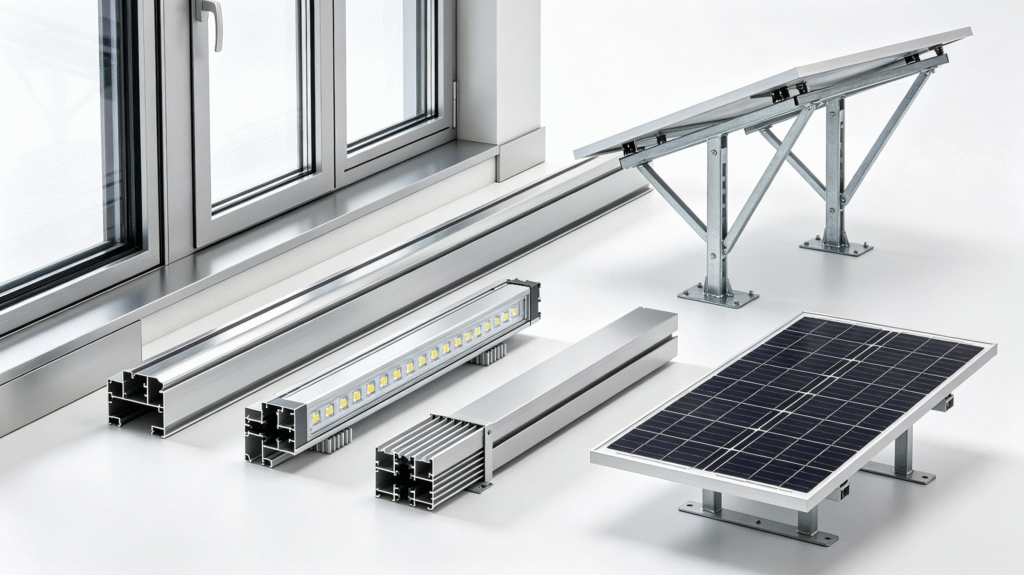
Anodized aluminum is widely used in:
Window frames
Door systems
Curtain walls
Facade structures
Its durability and appearance make it ideal for modern construction.
Aluminum Skirting Boards
Premium anodized skirting boards offer:
Elegant appearance
Long-term durability
Easy maintenance
Popular in residential and commercial interiors.
Industrial Automation
Industrial profiles benefit from anodizing because it improves:
Wear resistance
Corrosion protection
Professional appearance
LED Lighting Profiles
Anodized aluminum is commonly used in:
LED channels
Heat sinks
Lighting housings
The finish improves both appearance and thermal performance.
Solar Energy Systems
Solar mounting structures often use anodized aluminum due to its excellent outdoor durability.
Consumer Electronics
Many premium electronic products feature anodized aluminum housings because of their attractive finish and durability.
Anodized Aluminum vs Powder Coated Aluminum
Both finishes offer excellent protection, but they serve different purposes.
Advantages of Anodizing
Metallic appearance
Higher scratch resistance
Long-term color stability
No peeling or flaking
Advantages of Powder Coating
Unlimited color options
Thicker protective layer
Greater design flexibility
The best choice depends on the application and design goals.
Factors That Affect Anodizing Quality
Aluminum Alloy Selection
6063 aluminum is particularly well suited for anodizing because it produces smooth and uniform finishes.
Surface Preparation
Proper cleaning and pretreatment are essential for consistent results.
Anodizing Thickness
Thicker anodized layers generally provide better durability and corrosion resistance.
Process Control
Experienced manufacturers maintain strict process control to ensure finish consistency.
How to Choose an Anodized Aluminum Profile Supplier
When evaluating manufacturers, consider:
Anodizing Capacity
Can the supplier handle your required profile sizes and volumes?
Quality Standards
Look for manufacturers that follow internationally recognized anodizing specifications.
OEM and ODM Experience
Custom manufacturing expertise is important for specialized projects.
Surface Finish Consistency
Consistent color and finish quality are critical for large projects.
Future Trends in Anodized Aluminum
The anodizing industry continues to evolve with new technologies.
Emerging trends include:
Advanced color anodizing
Improved environmental performance
Enhanced corrosion protection
Smart architectural finishes
High-performance industrial coatings
These innovations continue to expand the applications of anodized aluminum profiles.
Conclusion
Anodized aluminum profiles offer an outstanding combination of durability, corrosion resistance, appearance, and sustainability. From architectural systems and industrial equipment to LED lighting and consumer electronics, anodized aluminum remains one of the most versatile and reliable materials available.
For businesses seeking premium aluminum solutions that combine performance with long-term value, anodized aluminum profiles continue to be one of the best choices in the global market.