




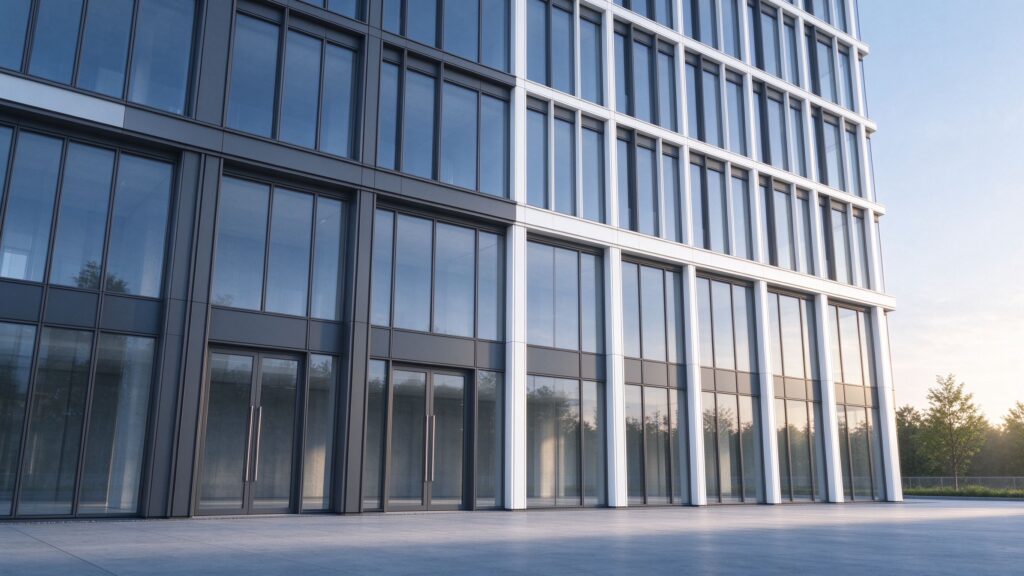
Windows and doors are among the most widely used applications for aluminum extrusion. With the right profile design, aluminum can provide a combination of structural strength, dimensional stability, corrosion resistance, and modern appearance.
Aluminum profiles for windows and doors can be customized to meet different architectural requirements, including sliding windows, casement windows, sliding doors, entrance systems, and large-format glass structures.
For manufacturers, architects, contractors, and building product distributors, understanding how aluminum profiles are designed and manufactured can help improve product performance while controlling production costs.
Why Is Aluminum Used for Windows and Doors?
Aluminum has become a popular material for modern window and door systems because it combines several useful properties in one material.
Key advantages include:
- Lightweight construction
- Good structural strength
- Corrosion resistance
- Dimensional stability
- Long service life
- Low maintenance requirements
- Flexible extrusion design
- Excellent surface finishing options
- Recyclability
Unlike some materials that can expand, warp, or deteriorate significantly under changing environmental conditions, properly designed aluminum profiles can maintain stable dimensions over long-term use.
This makes aluminum suitable for both residential and commercial building applications.
What Are Aluminum Window and Door Profiles?
An aluminum window or door profile is an extruded aluminum component designed to form part of the frame, sash, track, or supporting structure.
A complete system may contain several different profiles, including:
- Frame profiles
- Sash profiles
- Mullions
- Transoms
- Sliding tracks
- Glazing beads
- Reinforcement profiles
- Threshold profiles
- Connecting profiles
- Decorative trims
Each extrusion has a specific function within the overall system.
The profiles must work together to provide the required structural performance, glass support, sealing, drainage, and hardware installation.
Common Types of Aluminum Window Profiles
Different opening systems require different extrusion designs.
Casement Window Profiles
Casement windows are hinged and open outward or inward.
The aluminum extrusion system normally includes a fixed frame, sash, glazing components, and sealing interfaces.
Profile geometry must provide enough space for:
- Glass installation
- Gaskets
- Hardware
- Drainage
- Sealing
Sliding Window Profiles
Sliding windows move horizontally along a track.
The extrusion system may include:
- Upper tracks
- Lower tracks
- Sliding sashes
- Rollers
- Interlocking profiles
- Glazing beads
The track geometry needs to work correctly with the selected rollers and hardware.
Sliding Door Profiles
Aluminum sliding doors are widely used for balconies, patios, commercial buildings, and interior spaces.
Because larger glass panels can create higher loads, the frame design needs to consider:
- Profile strength
- Glass weight
- Roller capacity
- Frame dimensions
- Wind loads
- Installation requirements
Custom extrusion allows the profile to be optimized around the complete door system.
Thermal Performance and Aluminum Profiles
One important consideration in modern building design is thermal performance.
Aluminum conducts heat efficiently, which is useful in many industrial applications but requires careful design when aluminum is used for energy-efficient building envelopes.
One common approach is the use of thermal break aluminum profiles.
A thermal break separates the interior and exterior portions of the aluminum frame using a low-conductivity material.
This can help reduce direct heat transfer through the frame.
A thermal-break window system may therefore include:
- Exterior aluminum profile
- Interior aluminum profile
- Insulating thermal barrier
- Glass system
- Sealing components
The complete window system should be evaluated rather than judging thermal performance from the aluminum profile alone.
Aluminum Profile Wall Thickness
Wall thickness is an important part of extrusion design.
A profile that is too thin may not provide sufficient rigidity or may create manufacturing challenges.
Increasing wall thickness, however, also increases:
- Material consumption
- Profile weight
- Extrusion cost
- Transportation cost
The goal is to achieve an appropriate balance between structural requirements and material efficiency.
Profile geometry can often be optimized using internal ribs, chambers, and supporting sections instead of simply increasing the thickness of every wall.
Aluminum Extrusion Design for Windows and Doors
A well-designed aluminum profile should be suitable for both the final application and the extrusion process.
During the design stage, engineers should consider:
- Profile dimensions
- Wall thickness
- Internal cavities
- Screw channels
- Glass channels
- Gasket locations
- Drainage paths
- Hardware interfaces
- Thermal-break requirements
- Surface treatment
- Extrusion tolerances
The extrusion die must also be designed according to the cross-section.
A complex profile may require additional engineering work to achieve stable metal flow and consistent dimensions.
Surface Finishes for Aluminum Window and Door Profiles
Aluminum provides a wide range of finishing options, allowing manufacturers to match different architectural styles.
Common finishes include:
Powder Coating
Powder coating can provide a durable colored surface and is available in a wide range of architectural colors.
It is commonly used for exterior aluminum windows and doors.
Anodizing
Anodizing creates a protective oxide layer and can provide finishes such as natural, silver, bronze, or darker architectural tones.
It is particularly useful when the metallic appearance of aluminum is desired.
Woodgrain Finish
Woodgrain transfer printing can provide the appearance of natural wood while maintaining the structural characteristics of aluminum.
This finish is often used when architects or homeowners want a traditional appearance combined with aluminum construction.
Aluminum Profiles and Glass Systems
The aluminum frame and glass should be considered as one complete system.
The profile needs to accommodate the selected glass thickness and glazing method.
Depending on the product, the system may use:
- Single glazing
- Double glazing
- Insulating glass units
- Laminated glass
- Tempered glass
- Other specialized glass configurations
The profile design must provide appropriate support and sealing for the selected glass system.
Drainage Design Is Important
Water management is an important part of exterior window and door design.
Rainwater can enter the frame through joints, seals, or other openings.
A properly designed system may use internal drainage channels to direct water toward designated drainage points.
The extrusion profile may therefore include:
- Drainage channels
- Internal chambers
- Sloped surfaces
- Drainage openings
- Sealing interfaces
Good drainage design can help protect the building interior and reduce long-term maintenance problems.
CNC Machining of Aluminum Window Profiles
Extrusion creates the basic profile, but additional machining may be required before assembly.
Typical operations include:
- Cutting
- Drilling
- Milling
- Slotting
- Punching
- Tapping
- End machining
- Hardware preparation
For large production volumes, automated cutting and machining systems can improve consistency and production efficiency.
For customized architectural systems, CNC machining can provide greater flexibility for different hardware configurations and installation requirements.
Quality Control for Aluminum Window and Door Profiles
Quality control should begin with the raw material and continue through extrusion, finishing, machining, and packaging.
Important inspection areas include:
Profile Dimensions
Critical dimensions should be checked against the approved technical drawing.
Surface Quality
Profiles should be inspected for scratches, dents, color variation, extrusion marks, and other visible defects.
Coating Quality
For powder-coated profiles, coating appearance and adhesion should meet the applicable project requirements.
Anodized Finish
Anodized profiles should be checked for appearance and consistency.
Cut Length
Finished components should meet the specified length requirements.
Assembly Fit
Sample assembly can help verify that the profiles work correctly with glass, gaskets, hardware, and other components.
Custom Aluminum Window and Door Profiles
Standard profiles may be suitable for common applications, but custom extrusion provides greater flexibility when a project has unique requirements.
A custom aluminum profile can be developed around:
- Specific glass dimensions
- Unique architectural designs
- Custom hardware
- Special installation methods
- Thermal-break systems
- Large-format doors
- Special surface finishes
A typical development process may include:
Customer Drawing → Profile Review → 3D CAD Development → Die Design → Extrusion → Sample Production → Testing → Surface Treatment → Machining → Mass Production
Early engineering review is important because changes to the profile after die production can increase development time and cost.
How to Reduce Aluminum Window and Door Costs
Cost optimization should begin during profile design rather than after production.
Several factors can influence the total cost:
- Profile weight
- Aluminum alloy
- Die complexity
- Production volume
- Surface treatment
- Machining requirements
- Packaging
- Glass compatibility
- Hardware requirements
Reducing unnecessary material while maintaining structural performance can lower both material and transportation costs.
At the same time, an overly lightweight profile may create structural or manufacturing problems.
The most effective approach is to optimize the complete system rather than focusing only on the price per kilogram of aluminum.
Applications of Aluminum Window and Door Profiles
Custom aluminum extrusion profiles are used in many types of construction projects, including:
- Residential windows
- Apartment buildings
- Commercial buildings
- Office buildings
- Hotels
- Schools
- Retail spaces
- Industrial facilities
- Balconies
- Patios
- Interior partitions
- Curtain wall systems
The required profile design and performance specifications can vary significantly between projects.
Final Thoughts
Aluminum profiles for windows and doors provide a flexible foundation for modern architectural systems.
The extrusion process allows manufacturers to create complex profiles that integrate structural support, glass channels, sealing systems, drainage paths, hardware interfaces, and decorative features into a single component.
For successful results, profile design, alloy selection, extrusion, surface treatment, machining, glass compatibility, and assembly should all be considered together.
Whether the project requires standard architectural profiles or fully customized OEM/ODM components, a well-engineered aluminum extrusion system can provide the combination of strength, durability, appearance, and manufacturing efficiency required for modern windows and doors.