




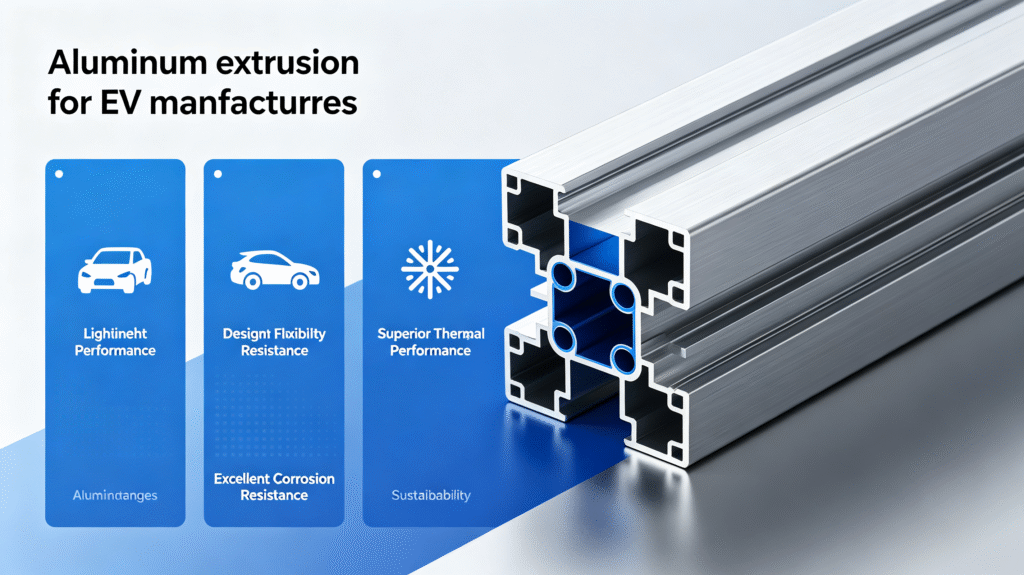
Aluminum Extrusion for Electric Vehicles: Lightweight Solutions for the Future of Transportation
The global automotive industry is undergoing a major transformation as electric vehicles (EVs) become increasingly popular. As manufacturers focus on improving driving range, reducing vehicle weight, and enhancing safety, aluminum extrusion for electric vehicles has become a critical technology in modern automotive design.
Aluminum profiles provide an ideal combination of lightweight performance, structural strength, corrosion resistance, and design flexibility. From battery enclosures and crash structures to body frames and thermal management systems, custom aluminum extrusions are helping electric vehicle manufacturers develop safer, more efficient, and more sustainable transportation solutions.
This guide explores the role of aluminum extrusion in electric vehicles, its key applications, advantages, and future development trends.
Why Aluminum Is Important for Electric Vehicles
Weight reduction is one of the biggest challenges in EV development.
Unlike traditional gasoline vehicles, electric vehicles carry heavy battery systems that significantly increase overall vehicle weight. Reducing weight in other components helps compensate for battery mass and improves vehicle efficiency.
Aluminum provides an excellent solution because it offers:
-
Lightweight construction
-
High strength-to-weight ratio
-
Excellent corrosion resistance
-
Good energy absorption
-
Strong recyclability
The Importance of Lightweight Design in EV Manufacturing
Vehicle weight directly affects:
-
Driving range
-
Energy consumption
-
Acceleration performance
-
Battery efficiency
-
Overall vehicle cost
By replacing heavier materials with aluminum components, manufacturers can improve vehicle efficiency without sacrificing safety.
For electric vehicles, every kilogram saved can contribute to improved performance and extended range.
Major Applications of Aluminum Extrusions in Electric Vehicles
Battery Enclosures and Battery Frames
The battery pack is one of the most important components of an electric vehicle.
Aluminum extrusions are widely used in battery systems because they provide:
-
Structural protection
-
Lightweight support
-
Heat management capability
-
Corrosion resistance
Battery enclosure profiles must withstand:
-
Vehicle vibration
-
Impact forces
-
Environmental exposure
-
Temperature changes
Custom aluminum extrusion designs allow manufacturers to integrate multiple functions into a single component.
Crash Management Systems
Vehicle safety is a top priority in EV design.
Aluminum profiles are used in:
-
Front crash structures
-
Side impact beams
-
Reinforcement components
Because aluminum can absorb impact energy efficiently, it helps protect passengers and critical vehicle components.
Automotive Body Structures
Many electric vehicles use aluminum-intensive body structures to reduce weight.
Applications include:
-
Roof rails
-
Frame components
-
Cross members
-
Structural reinforcements
Extruded aluminum allows manufacturers to create lightweight yet strong designs.
Thermal Management Systems
Battery temperature control is essential for EV performance and safety.
Aluminum is an excellent thermal conductor, making it suitable for:
-
Cooling channels
-
Heat exchangers
-
Thermal plates
-
Battery cooling structures
Efficient heat management helps maintain battery performance and extend service life.
Interior and Exterior Components
Aluminum extrusion is also used for various vehicle components, including:
-
Door reinforcement structures
-
Seat frames
-
Roof systems
-
Interior support components
Its lightweight properties help improve overall vehicle efficiency.
Advantages of Aluminum Extrusion for EV Manufacturers
Lightweight Performance
Aluminum weighs significantly less than steel while maintaining strong mechanical properties.
This helps manufacturers:
-
Increase driving range
-
Reduce energy consumption
-
Improve vehicle efficiency
Design Flexibility
Aluminum extrusion allows engineers to create customized shapes that combine multiple functions.
Manufacturers can integrate:
-
Mounting channels
-
Cooling passages
-
Reinforcement structures
-
Connection features
This reduces the number of individual components required.
Excellent Corrosion Resistance
Electric vehicles often operate in challenging environments, including:
-
Rain
-
Snow
-
Road salt
-
Humidity
-
Coastal climates
Aluminum naturally forms a protective oxide layer that improves long-term durability.
Superior Thermal Performance
Battery systems require efficient heat control.
Aluminum extrusion provides:
-
Fast heat transfer
-
Stable thermal performance
-
Lightweight cooling solutions
This makes it especially valuable for EV battery applications.
Sustainability Advantages
Aluminum supports the environmental goals of electric mobility.
Benefits include:
-
High recyclability
-
Long service life
-
Reduced lifecycle emissions
Recycled aluminum can be reused repeatedly while maintaining performance.
Manufacturing Process of EV Aluminum Profiles
Aluminum Alloy Selection
Common automotive alloys are selected based on requirements such as:
-
Strength
-
Formability
-
Corrosion resistance
-
Weight optimization
Extrusion Process
During extrusion:
-
Aluminum billets are heated
-
Material is pushed through a custom die
-
The profile shape is formed
-
The extrusion is cooled and stretched
-
Final dimensions are controlled
Advanced extrusion technology enables complex automotive profiles.
CNC Machining
After extrusion, additional processing may include:
-
Precision cutting
-
Drilling
-
Milling
-
Assembly preparation
CNC machining ensures accurate integration into vehicle systems.
Surface Treatment
Common finishes include:
Anodizing
Provides:
-
Corrosion resistance
-
Surface durability
-
Long-term protection
Powder Coating
Provides:
-
Additional protection
-
Custom appearance
-
Environmental resistance
Challenges in EV Aluminum Extrusion
Although aluminum offers many advantages, manufacturers must address several challenges.
Cost Management
Aluminum components may have higher initial costs compared with traditional materials.
However, improved efficiency and performance can create long-term value.
Precision Requirements
Automotive applications require extremely consistent quality.
Manufacturers must control:
-
Dimensions
-
Mechanical properties
-
Surface quality
Complex Design Requirements
EV components often require advanced profiles with:
-
Multiple cavities
-
Integrated cooling structures
-
Lightweight optimization
This requires strong engineering expertise.
How to Choose an Automotive Aluminum Extrusion Supplier
For EV applications, manufacturers should evaluate:
Automotive Experience
Suppliers should understand:
-
Automotive standards
-
Safety requirements
-
Large-scale production needs
Advanced Production Capability
Important capabilities include:
-
High-quality extrusion lines
-
CNC machining
-
Surface treatment
-
Inspection systems
Engineering Support
A capable supplier can assist with:
-
Profile optimization
-
Weight reduction
-
Cost control
-
Manufacturing feasibility
Quality Management
Automotive customers require strict quality systems to ensure reliable performance.
Future Trends of Aluminum Extrusion in Electric Vehicles
The demand for aluminum extrusion will continue growing as EV technology advances.
Future developments include:
-
Integrated battery structures
-
Lightweight vehicle platforms
-
Advanced thermal management systems
-
Multi-functional aluminum profiles
-
Sustainable aluminum manufacturing
-
Intelligent production systems
As electric vehicles become more advanced, aluminum will continue playing a key role in transportation innovation.
Conclusion
Aluminum extrusion has become a fundamental technology in electric vehicle manufacturing. Its lightweight characteristics, structural strength, thermal performance, and sustainability make it an ideal material for next-generation transportation systems.
From battery enclosures and crash structures to thermal management and vehicle frames, custom aluminum profiles help EV manufacturers create safer, lighter, and more efficient vehicles.
For automotive companies seeking competitive advantages in the electric vehicle market, partnering with an experienced aluminum extrusion manufacturer provides the engineering support and production capability needed for long-term success.