



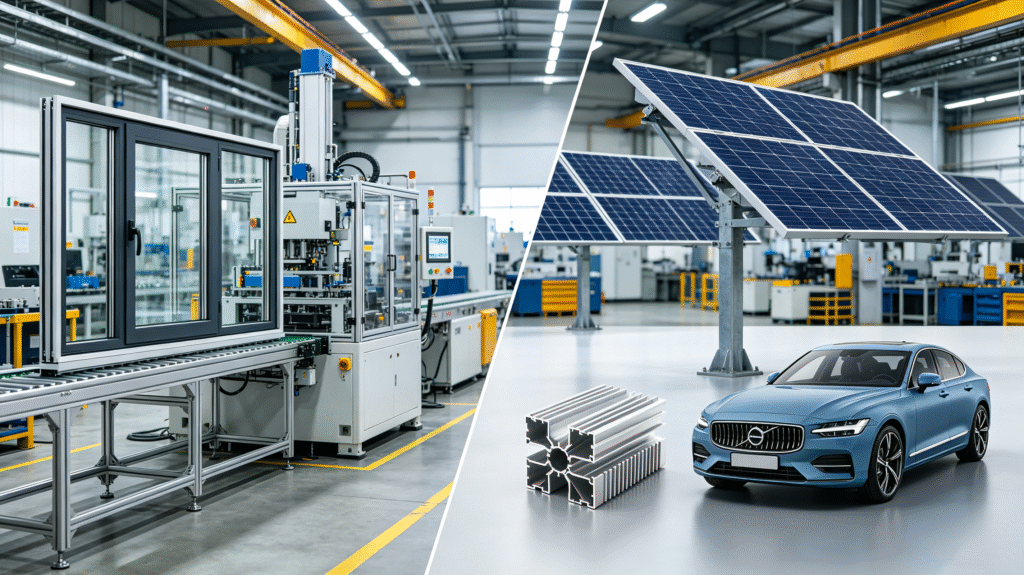
In today’s competitive manufacturing industry, businesses need more than just a supplier—they need a reliable development partner. This is why ODM aluminum extrusion services have become increasingly popular among companies looking to bring innovative aluminum products to market quickly and efficiently.
Unlike traditional manufacturing, ODM (Original Design Manufacturer) services provide customers with engineering expertise, product design optimization, tooling development, and full-scale production support. Whether you’re launching a new architectural system, industrial component, solar mounting solution, LED profile, or consumer product, an experienced ODM aluminum extrusion manufacturer can help transform your ideas into market-ready products.
This guide explains what ODM aluminum extrusion services are, how they differ from OEM manufacturing, and why they are becoming an essential solution for global brands.
What Is ODM Aluminum Extrusion?
ODM (Original Design Manufacturing) is a manufacturing model in which the supplier participates in the product design and engineering process in addition to manufacturing.
Instead of simply producing a customer’s existing drawings, the manufacturer helps develop and optimize the product from the initial concept.
Typical ODM services include:
-
Product concept evaluation
-
Structural design
-
Aluminum profile design
-
Material selection
-
Extrusion die development
-
Prototype manufacturing
-
CNC machining
-
Surface finishing
-
Product testing
-
Mass production
This collaborative approach shortens development time while improving product performance.
ODM vs. OEM Aluminum Extrusion
Although both services involve custom manufacturing, there are important differences.
| Feature | OEM | ODM |
|---|---|---|
| Product design | Customer provides the design | Manufacturer assists with or creates the design |
| Engineering support | Limited optimization | Comprehensive product development |
| Tooling design | Based on customer drawings | Optimized by the manufacturer |
| Product innovation | Customer-driven | Joint development |
| Time to market | Depends on design readiness | Often faster due to engineering support |
For companies without in-house engineering resources, ODM services offer significant advantages.
Why Businesses Choose ODM Aluminum Extrusion
Faster Product Development
Developing a new aluminum product can require months of engineering work.
An experienced ODM manufacturer helps accelerate the process by providing:
-
Design recommendations
-
Engineering simulations
-
Manufacturing optimization
-
Prototype validation
This reduces development cycles and helps products reach the market sooner.
Professional Engineering Support
Experienced engineers understand both product performance and manufacturing limitations.
They help optimize:
-
Wall thickness
-
Structural strength
-
Weight reduction
-
Assembly methods
-
Extrusion feasibility
Early engineering involvement often reduces production costs while improving product quality.
Lower Development Costs
ODM services can reduce expenses by:
-
Eliminating unnecessary design revisions
-
Improving material utilization
-
Simplifying manufacturing processes
-
Reducing tooling modifications
Better engineering decisions early in the project often lead to substantial savings during mass production.
The ODM Aluminum Extrusion Development Process
Step 1: Project Consultation
Customers typically provide:
-
Product concepts
-
Functional requirements
-
Target applications
-
Performance expectations
-
Budget considerations
Even without complete technical drawings, the development process can begin.
Step 2: Engineering Design
The manufacturer’s engineering team develops:
-
CAD drawings
-
Cross-sectional profile designs
-
Structural analysis
-
Assembly concepts
Computer simulation tools help verify the feasibility of the proposed design.
Step 3: Prototype Manufacturing
Prototype production allows customers to evaluate:
-
Product appearance
-
Dimensional accuracy
-
Structural performance
-
Assembly compatibility
Necessary improvements can be made before mass production begins.
Step 4: Tooling Development
After prototype approval, precision extrusion dies are manufactured.
Well-designed tooling ensures:
-
Stable production
-
High dimensional accuracy
-
Excellent surface quality
-
Long die life
Step 5: Mass Production
Production typically includes:
-
Aluminum extrusion
-
CNC machining
-
Surface finishing
-
Assembly
-
Quality inspection
-
Packaging
Integrated manufacturing improves efficiency and consistency.
Industries That Benefit from ODM Aluminum Extrusion
Architecture
ODM services support the development of:
-
Window systems
-
Door frames
-
Curtain walls
-
Pergolas
-
Decorative aluminum products
Industrial Automation
Custom automation solutions often require specialized aluminum profiles for:
-
Machine frames
-
Conveyor systems
-
Robotic equipment
-
Safety enclosures
Renewable Energy
ODM manufacturers help design:
-
Solar mounting systems
-
Battery enclosures
-
Energy storage structures
Optimized profiles improve strength while reducing material consumption.
Consumer Electronics
Applications include:
-
LED lighting profiles
-
Heat sinks
-
Electronic enclosures
-
Smart device housings
Product appearance and thermal performance are both critical considerations.
Transportation
ODM aluminum extrusion is widely used for:
-
Electric vehicles
-
Rail systems
-
Marine equipment
-
Lightweight structural components
Advantages of Choosing an Integrated ODM Manufacturer
A full-service manufacturer can manage every stage of product development.
Benefits include:
One-Stop Manufacturing
Integrated services may include:
-
Engineering
-
Tooling
-
Extrusion
-
CNC machining
-
Surface treatment
-
Assembly
-
Packaging
Customers communicate with a single supplier throughout the project.
Better Product Consistency
Integrated production reduces variability between manufacturing stages.
Quality is maintained through standardized processes and comprehensive inspection.
Faster Problem Solving
Engineering, production, and quality teams work together to resolve technical issues quickly.
This minimizes delays and improves project efficiency.
Surface Finishing Options
ODM aluminum products can be finished according to customer requirements.
Common options include:
Anodizing
Provides:
-
Excellent corrosion resistance
-
Durable surface protection
-
Premium metallic appearance
Powder Coating
Offers:
-
Extensive color options
-
UV resistance
-
Decorative flexibility
Wood Grain Transfer Printing
Combines the natural appearance of wood with the durability of aluminum.
This finish is popular for architectural applications.
How to Choose an ODM Aluminum Extrusion Partner
When evaluating suppliers, consider the following:
Engineering Expertise
Look for a manufacturer with a dedicated R&D team capable of supporting product innovation.
Manufacturing Capabilities
An ideal supplier should offer:
-
In-house die design
-
Modern extrusion presses
-
CNC machining
-
Surface finishing
-
Assembly services
Quality Management
Reliable manufacturers implement strict inspection procedures covering materials, dimensions, coatings, and final product performance.
Global Project Experience
Experience serving international customers helps ensure compliance with different technical standards and market expectations.
Future Trends in ODM Aluminum Manufacturing
The demand for ODM services continues to grow as companies seek faster innovation and more customized products.
Emerging trends include:
-
AI-assisted product design
-
Digital twin engineering
-
Lightweight structural optimization
-
Sustainable aluminum solutions
-
Smart manufacturing systems
-
Fully integrated supply chain management
These technologies are making ODM partnerships even more valuable for global manufacturers.
Conclusion
ODM aluminum extrusion services provide far more than manufacturing—they offer complete product development solutions. By combining engineering expertise, custom profile design, tooling development, precision machining, and quality-controlled production, ODM manufacturers help businesses reduce development time, lower costs, and bring innovative products to market faster.
Whether you are creating a new architectural system, industrial automation component, solar mounting solution, or consumer product, partnering with an experienced ODM aluminum extrusion manufacturer ensures reliable performance, efficient production, and long-term competitive advantages.