




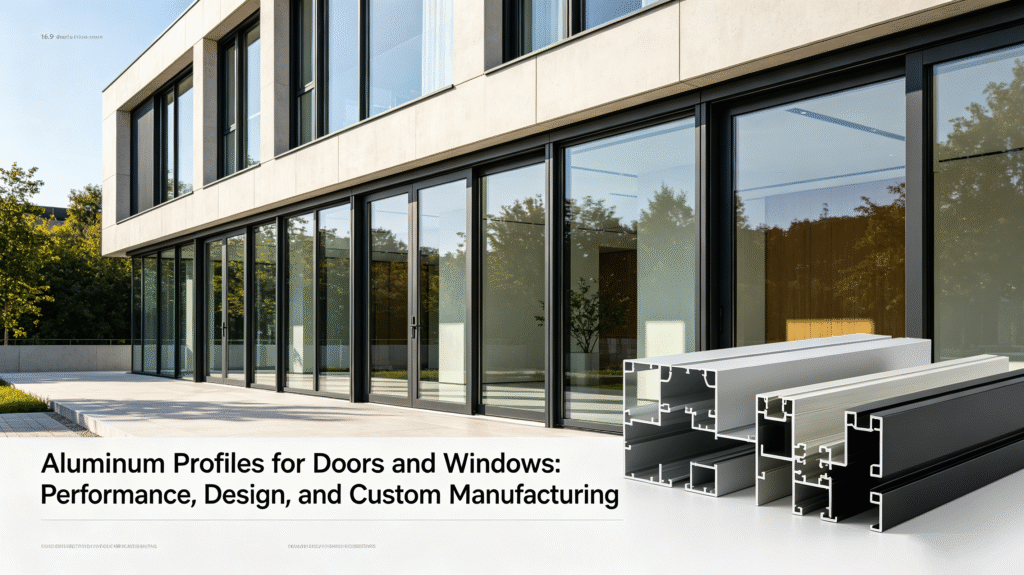
Aluminum doors and windows have become the preferred choice for residential, commercial, and high-rise construction projects around the world. Compared with traditional materials such as wood or steel, aluminum profiles for doors and windows offer outstanding strength, durability, weather resistance, and design flexibility.
As modern buildings increasingly emphasize energy efficiency, sustainability, and contemporary aesthetics, custom aluminum extrusion plays a critical role in creating high-performance window and door systems.
This guide explores the benefits, applications, manufacturing process, and key considerations when selecting aluminum profiles for doors and windows.
Why Aluminum Is the Preferred Material for Doors and Windows
Architects, contractors, and homeowners choose aluminum because it delivers an excellent balance of performance, appearance, and long-term value.
High Strength with Lightweight Construction
Aluminum offers exceptional structural strength while remaining significantly lighter than steel.
Key benefits include:
-
Easier transportation
-
Faster installation
-
Reduced structural load
-
Greater design flexibility
Its high strength-to-weight ratio also allows for slimmer frames that maximize natural light.
Excellent Corrosion Resistance
Door and window systems are continuously exposed to:
-
Rain
-
Humidity
-
UV radiation
-
Wind
-
Air pollution
Aluminum naturally forms a protective oxide layer that helps resist corrosion, making it ideal for both coastal and inland environments.
Low Maintenance Requirements
Unlike wood, aluminum does not:
-
Rot
-
Warp
-
Crack
-
Attract termites
Routine cleaning with mild soap and water is usually enough to maintain its appearance for years.
Modern Architectural Appearance
Aluminum profiles support contemporary architectural trends through:
-
Slim frame designs
-
Large glass panels
-
Minimalist aesthetics
-
Clean geometric lines
They are widely used in luxury homes, office buildings, hotels, and commercial developments.
Types of Aluminum Door and Window Profiles
Different applications require different profile systems.
Sliding Door Profiles
Sliding systems are ideal for:
-
Balconies
-
Patios
-
Commercial entrances
-
Large glass openings
Advantages include:
-
Space-saving operation
-
Smooth movement
-
Wide viewing areas
Casement Window Profiles
Casement windows provide excellent ventilation and weather sealing.
They are commonly used in:
-
Residential homes
-
Hotels
-
Schools
-
Office buildings
Folding Door Profiles
Bi-fold aluminum doors create wide openings by folding multiple panels.
Popular applications include:
-
Outdoor entertainment areas
-
Restaurants
-
Resorts
-
Luxury residences
Curtain Wall Profiles
High-rise commercial buildings often use aluminum curtain wall systems because of their lightweight structure and modern appearance.
Thermal Break Aluminum Profiles
Energy efficiency has become a major requirement in modern construction.
What Is a Thermal Break?
A thermal break profile includes an insulating material between the interior and exterior aluminum sections.
This design reduces heat transfer through the frame.
Benefits include:
-
Improved thermal insulation
-
Reduced energy consumption
-
Better indoor comfort
-
Lower heating and cooling costs
Thermal break systems are widely used in energy-efficient buildings.
Surface Finishes for Aluminum Doors and Windows
Surface treatment enhances both durability and appearance.
Anodized Finish
Advantages include:
-
Excellent corrosion resistance
-
Metallic appearance
-
Long service life
Suitable for both residential and commercial projects.
Powder Coating
Powder coating offers:
-
Extensive color options
-
UV resistance
-
Scratch resistance
-
Decorative flexibility
Popular colors include black, white, gray, bronze, and custom RAL colors.
Wood Grain Finish
Wood grain technology combines the appearance of natural wood with the durability of aluminum.
Benefits include:
-
Elegant appearance
-
Moisture resistance
-
Minimal maintenance
-
Long-lasting performance
This finish is increasingly popular in modern residential architecture.
Hardware Compatibility
Well-designed aluminum profiles integrate seamlessly with modern hardware systems.
Compatible accessories include:
-
Hinges
-
Locks
-
Handles
-
Rollers
-
Weather seals
-
Multi-point locking systems
Proper profile design ensures smooth operation and long-term reliability.
Advantages of Custom Aluminum Extrusion
Standard profiles may not always meet unique architectural or branding requirements.
Custom extrusion provides greater flexibility.
Tailored Designs
Manufacturers can create profiles optimized for:
-
Specific glass thicknesses
-
Custom opening systems
-
Unique architectural styles
-
Specialized hardware
Improved Manufacturing Efficiency
Custom profiles often integrate multiple functions into a single extrusion.
This can reduce:
-
Assembly time
-
Component count
-
Production costs
Stronger Brand Identity
OEM manufacturers can develop proprietary profile systems that differentiate their products in competitive markets.
Quality Standards for Aluminum Window and Door Profiles
Professional manufacturers implement strict quality control throughout production.
Inspection typically includes:
-
Dimensional accuracy
-
Surface finish quality
-
Mechanical performance
-
Profile straightness
-
Coating adhesion
Consistent quality helps ensure smooth fabrication and reliable installation.
Common Applications
Aluminum door and window profiles are widely used in:
Residential Buildings
-
Single-family homes
-
Apartments
-
Villas
-
Condominiums
Commercial Buildings
-
Office towers
-
Shopping centers
-
Hotels
-
Hospitals
Industrial Facilities
-
Warehouses
-
Factories
-
Office complexes
Public Infrastructure
-
Airports
-
Schools
-
Government buildings
-
Transportation hubs
How to Choose an Aluminum Profile Manufacturer
Selecting the right manufacturing partner is critical for long-term success.
Important considerations include:
Extrusion Capacity
Can the supplier produce profiles that meet your technical requirements and order volumes?
Engineering Expertise
Experienced engineers can optimize designs for:
-
Strength
-
Energy efficiency
-
Manufacturing efficiency
-
Cost control
Integrated Manufacturing
Choose manufacturers that offer:
-
Extrusion
-
Surface finishing
-
CNC machining
-
Assembly services
Integrated production improves consistency and shortens lead times.
OEM and ODM Support
A reliable supplier should be able to support both custom product development and large-scale production.
Future Trends in Aluminum Doors and Windows
The industry continues to evolve through innovation.
Key trends include:
-
Ultra-slim frame systems
-
Smart windows and doors
-
Passive house technologies
-
High-performance thermal insulation
-
Sustainable aluminum manufacturing
-
Large-format glazing systems
These developments continue to increase demand for advanced aluminum extrusion solutions.
Conclusion
Aluminum profiles have transformed the door and window industry by offering superior strength, corrosion resistance, energy efficiency, and design flexibility. Whether used in residential homes, commercial buildings, or large architectural projects, aluminum extrusion provides reliable performance with minimal maintenance.
By partnering with an experienced aluminum extrusion manufacturer, businesses can develop customized door and window systems that meet modern architectural standards while delivering long-term value to customers.