


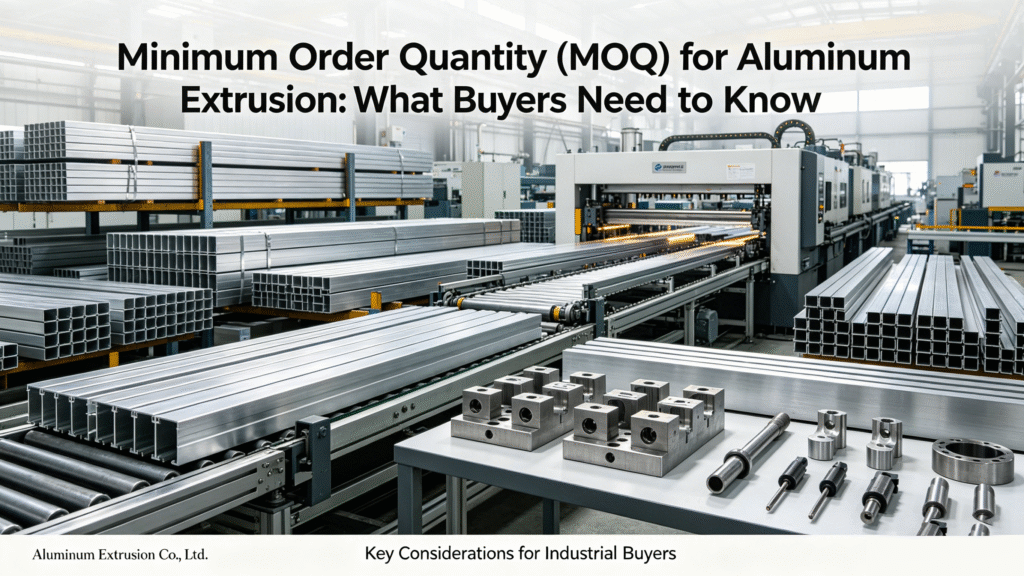
When sourcing custom aluminum profiles, one of the most common questions buyers ask is: What is the minimum order quantity (MOQ)?
Understanding MOQ is essential for project planning, cost control, and supplier selection. Whether you are developing a new product or sourcing for an ongoing project, knowing how MOQ works can help you make better purchasing decisions.
This guide explains how MOQ is determined in aluminum extrusion and how buyers can optimize their orders.
What Is MOQ in Aluminum Extrusion?
MOQ (Minimum Order Quantity) refers to the smallest quantity of aluminum profiles a manufacturer is willing to produce in a single order.
Unlike standard products, custom aluminum extrusion involves setup costs such as:
Die (tooling) manufacturing
Machine setup
Production calibration
Because of these fixed costs, manufacturers typically require a minimum order volume to ensure cost efficiency.
Typical MOQ Range
MOQ can vary depending on the manufacturer and project requirements, but general guidelines include:
Small profiles: Lower MOQ
Large or heavy profiles: Higher MOQ
Standard shapes: More flexible MOQ
Custom designs: Usually higher MOQ
In many cases, MOQ is measured by:
Total weight (kg or tons)
Length (meters)
Quantity of pieces
Why MOQ Exists
MOQ is not just a business policy—it is based on production realities.
1. Tooling Cost
Custom extrusion requires a dedicated die. Producing only a small quantity would not justify the cost of making the mold.
2. Machine Efficiency
Extrusion presses are designed for continuous production. Small batches reduce efficiency and increase unit cost.
3. Material Utilization
Larger production runs reduce waste and improve material usage.
4. Setup Time
Each production run requires setup and calibration. Frequent small orders increase operational costs.
MOQ vs Unit Cost
MOQ has a direct impact on pricing.
Low quantity = higher unit cost
High quantity = lower unit cost
This is because fixed costs are distributed across more units in larger orders.
For buyers, balancing MOQ and budget is key to achieving cost efficiency.
Can MOQ Be Negotiated?
In many cases, MOQ is flexible—especially when working with experienced manufacturers.
Factors that may allow MOQ adjustment include:
Simple profile design
Use of existing molds
Long-term cooperation potential
Willingness to accept higher unit price
Some manufacturers may also offer trial orders under certain conditions.
Strategies for Buyers to Manage MOQ
Combine Orders
If multiple projects use similar profiles, combining orders can help meet MOQ requirements.
Plan for Future Demand
Ordering larger quantities in advance can reduce unit cost and ensure stable supply.
Use Standard Profiles
Standard aluminum profiles often have lower MOQ compared to fully customized designs.
Discuss Alternatives
Manufacturers may suggest design modifications that reduce MOQ or cost.
MOQ for OEM Projects
For OEM aluminum profile projects, MOQ is typically higher due to:
Custom die development
Dedicated production lines
Specific surface finishing requirements
However, OEM projects benefit from:
Long-term cost savings
Consistent product quality
Scalable production
MOQ becomes less of a concern as production volume increases over time.
MOQ and Inventory Management
Buyers should also consider how MOQ affects inventory:
Large orders reduce unit cost but increase storage needs
Small orders reduce inventory but increase cost per unit
Finding the right balance is essential for efficient supply chain management.
Common Misunderstandings About MOQ
“MOQ is fixed and cannot change”
In reality, MOQ can often be adjusted based on project details.
“Lower MOQ is always better”
Lower MOQ usually means higher unit cost, which may not be cost-effective in the long run.
“All manufacturers have the same MOQ”
MOQ varies widely depending on factory capabilities and production scale.
How to Work Effectively with Manufacturers
To get the best results:
Communicate your project needs clearly
Share expected order volume and future plans
Ask for cost breakdowns
Explore flexible solutions
A good manufacturer will help you find the most efficient approach.
Conclusion
Minimum order quantity (MOQ) is a key factor in custom aluminum extrusion, influenced by tooling costs, production efficiency, and material usage.
By understanding how MOQ works and planning accordingly, buyers can optimize their orders, control costs, and build strong relationships with suppliers.
Rather than viewing MOQ as a limitation, it should be seen as part of a strategic approach to efficient manufacturing and long-term success.